
~ Diamond Terminology from A to Z ~
There are thousands of terms being used in today's jewelry industry. Some common knowledge, others are obscure and baffling. We've created a database of terminology from A to Z to make it easy, and of course if you still have questions, please do not hesitate to send us an email or give us a call.
Marbled
When any object has swirled colors of two or more.
Marquise
A fancy cut name for a diamond or gem that is basically an oval tapered at both ends. Read more on Marquise Diamonds.
Matte
A chemical process that scratches the top surface of a diamond or gem to remove it's reflective properties.
Melee
A diamond that weighs about or is smaller than .2ct. Usually found in ring bands or watches. In most cases these diamonds describe the type of diamond used in micro-pave settings.
Mineral
A solid inorganic substance of natural occurrence usually obtained through mining. Inorganic, on the other hand, means something is chemically combined to produce something else. It doesn't occur naturally in nature.
Moh's Scale
Moh's scale is a measure of hardness and resistance to scratching. The hardest substance being Diamonds. Nothing can cut a diamond but a diamond. The softest being Talc which is rated a 1, and Diamonds being the hardest are ranked at 10. There are many gems or stones that fall in-between 1 and 10, however no other gem or stone is equal to 10. It is only occupied by diamonds.
Moissanite
Moissanite is a very rare crystal found in nature, and is NOT man made. We say this because moissanite is so close to the properties of Diamond that only a machine could tell the difference, in most cases.
The Problem with moissanite is that it's being replicated in labs with virtually the same properties as in nature, and it's being passed off as diamonds by non scrupulous scam artists.
The Great thing about moissanite is it's just about as resistant as a diamond. Only a sharp eye can actually see that moissanite has a double back refraction, and their ability to transfer and sustain heat is pretty much the same as well. This is one crystal, either man made or nature made that can have devastating effects on the diamond community as it looks the same as a diamond and cost much, much less.
Mount
The action of actually putting a gem or diamond into a ring or piece of jewelry.
Mounting
The metal that resembles stems that hold the diamond or gem in place.
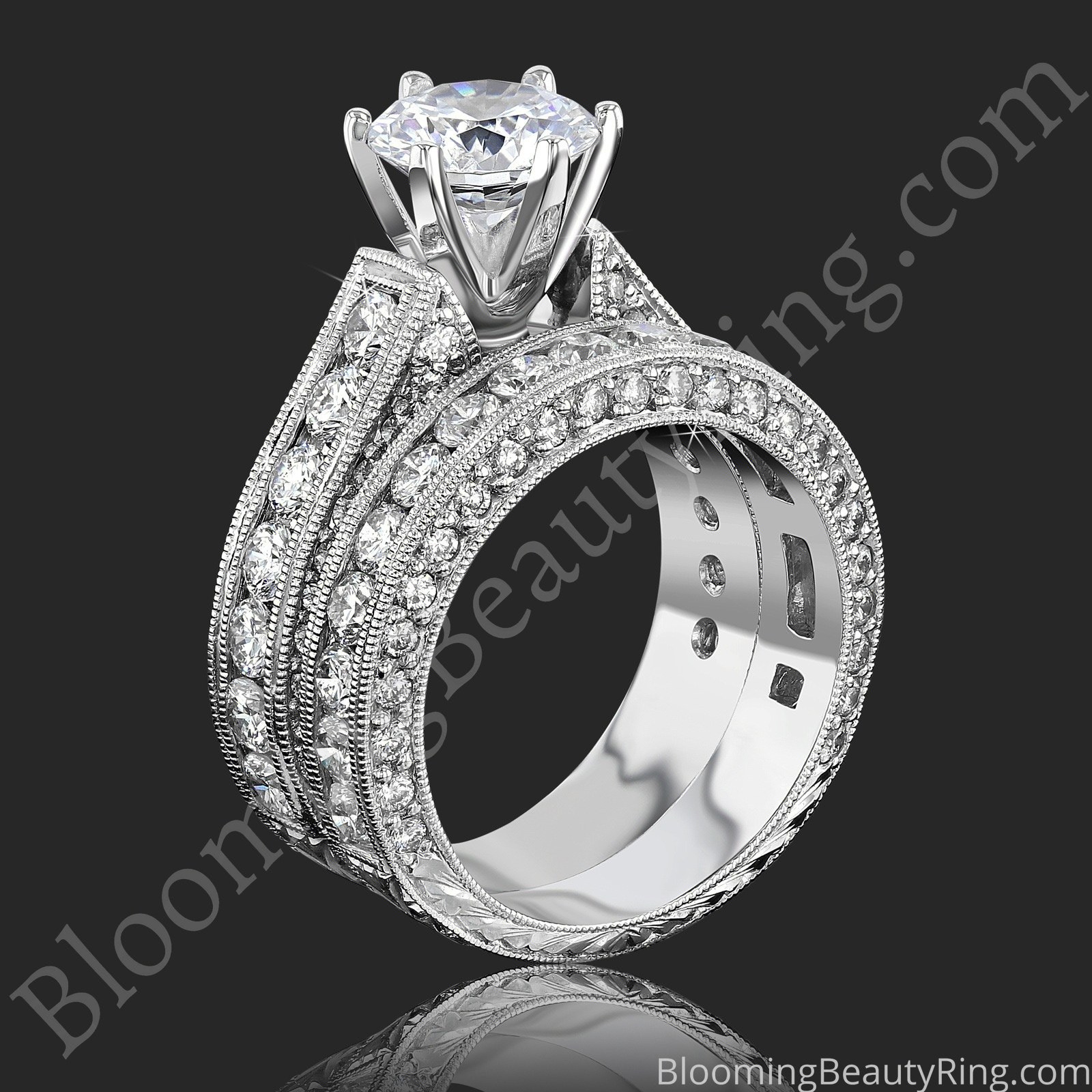 The Lattice Arch – Engraved Diamond Wedding Ring Set
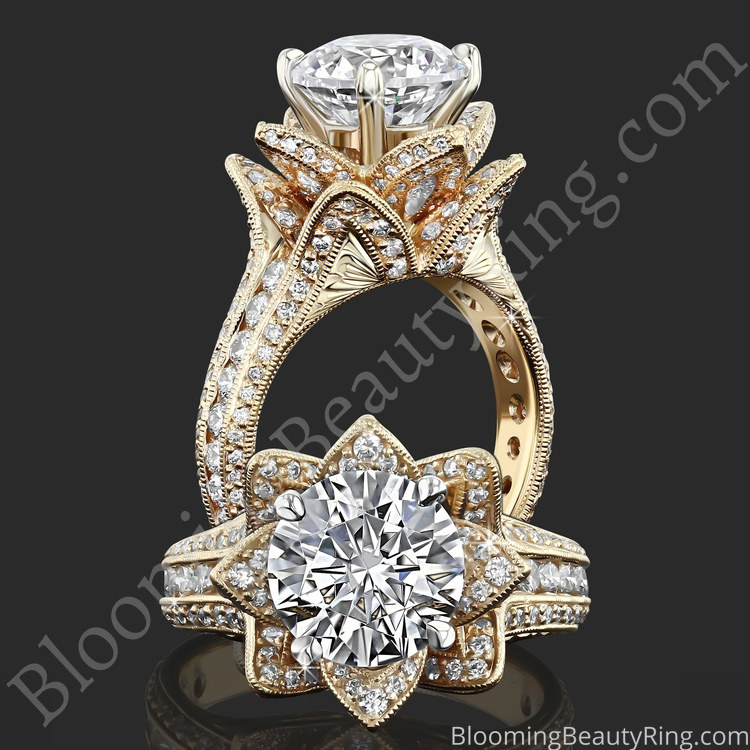 1.78ctw Yellow Gold Large Hand Engraved Blooming Beauty Flower Diamond Engagement Ring
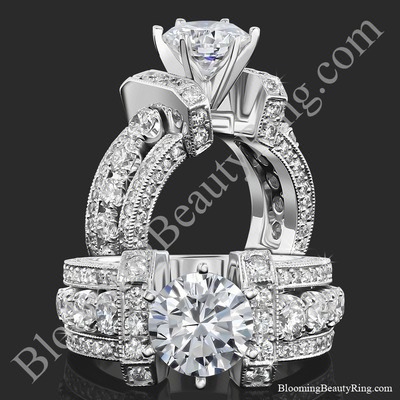 The Show Stopper – 2.0 ctw Statement Diamond Engagement Ring Setting
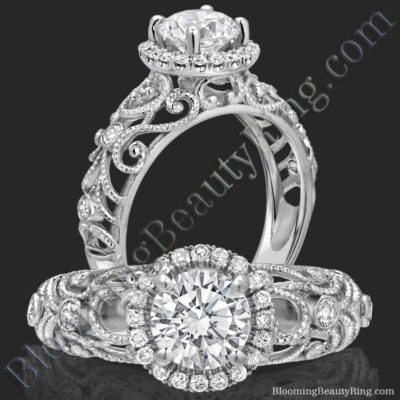 La Bella – Ornamental Filigree Diamond Halo Engagement Ring
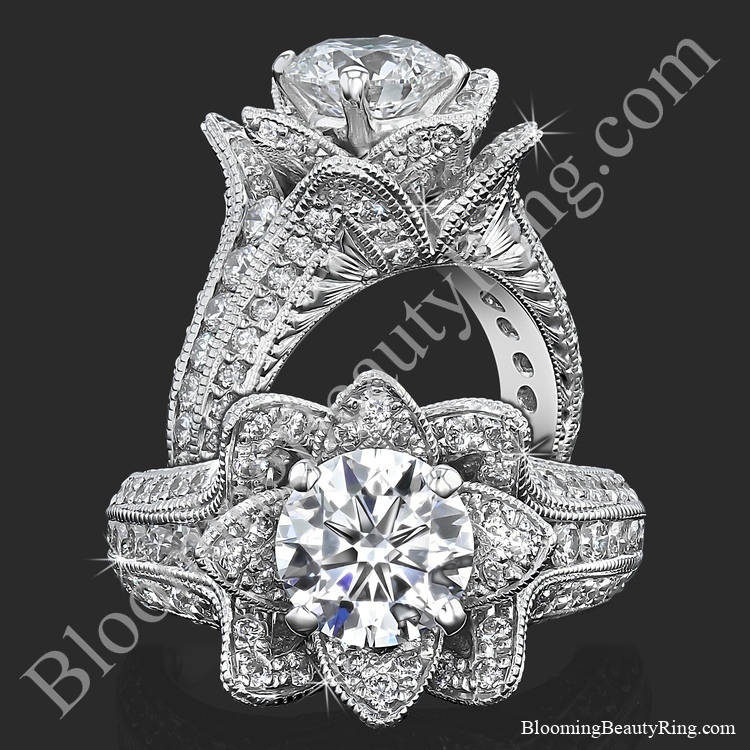 1.37 ctw. Small Hand Engraved Blooming Beauty Engagement Ring
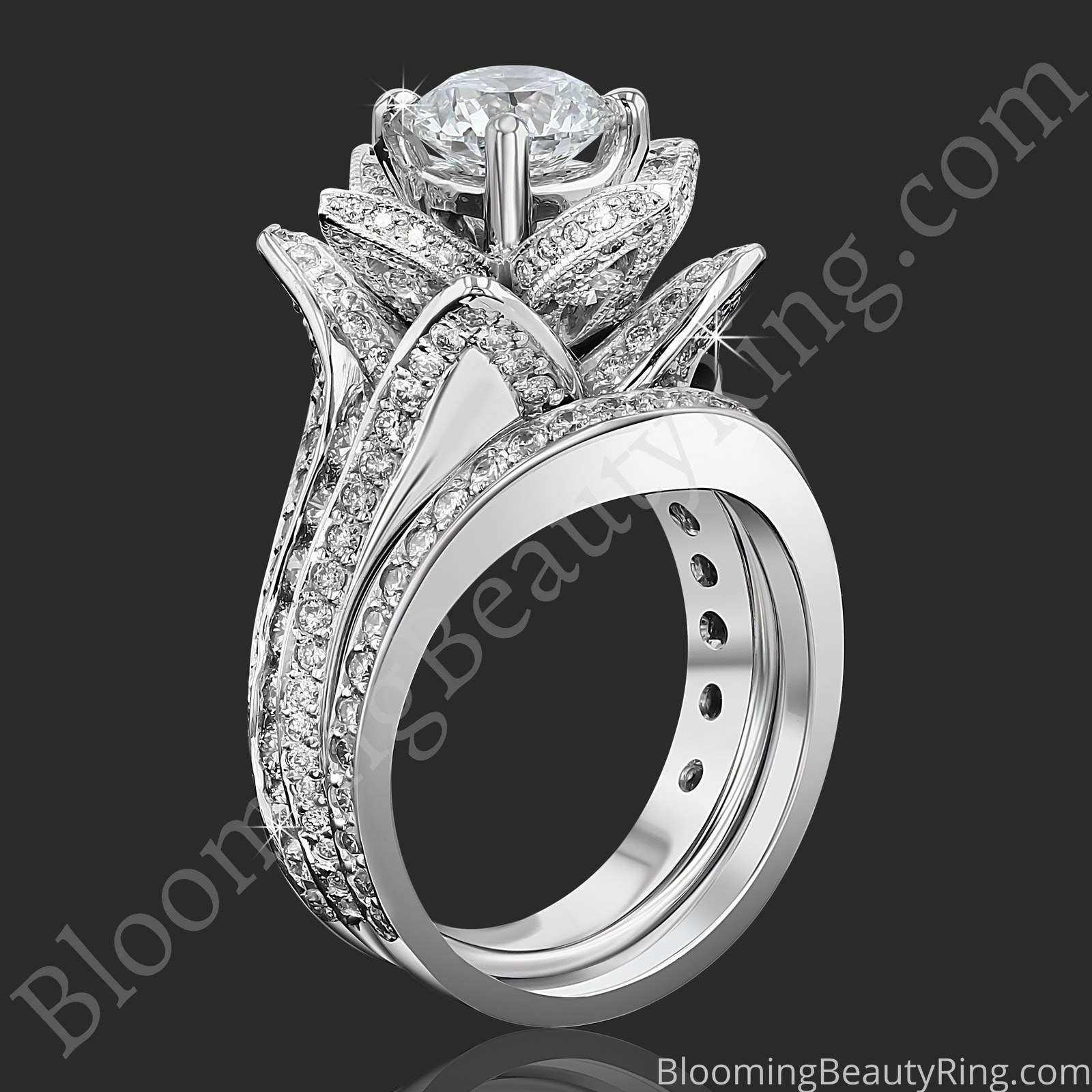 2.08 ctw. Original Large Blooming Beauty Flower Ring Set
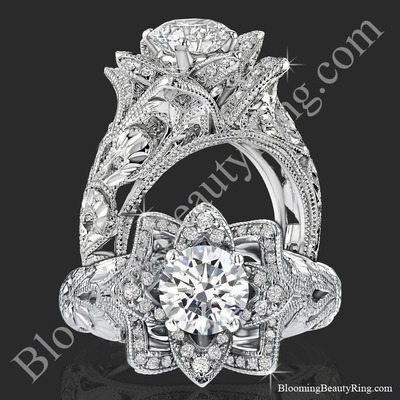 Diamond Embossed Blooming Rose Engagement Ring with Etched Carvings
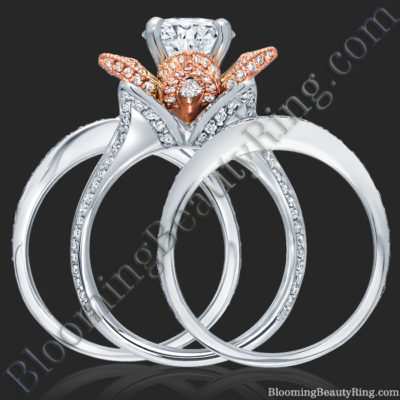 2.38 ctw. Double Band Two Toned White and Rose Gold Flower Ring Set
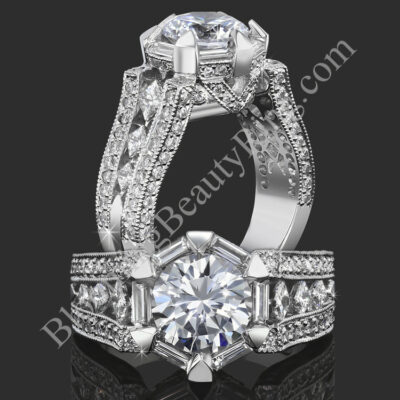 The Queens Crown Low Profile Vintage Inspired Round Engagement Ring
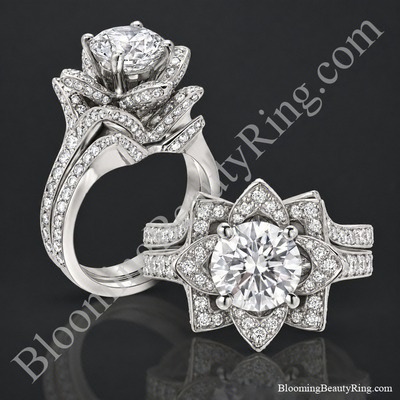 The Large Crimson Rose Flower Diamond Engagement Ring Set
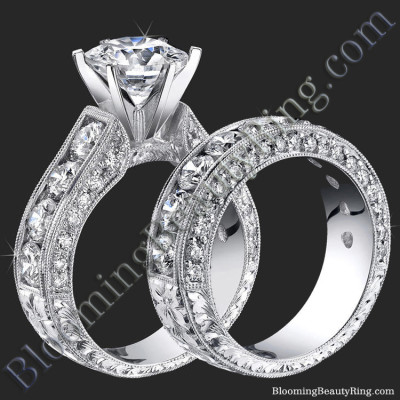 Spectacular 4.20 ctw. Top Quality Round Diamond Engagement Ring Set
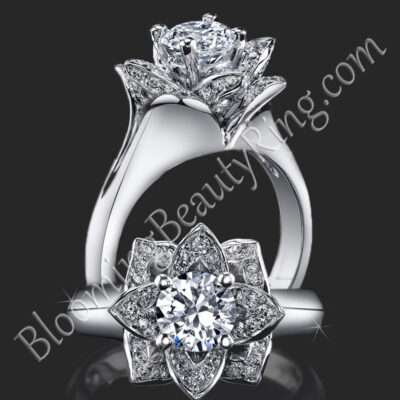 Lotus Ring 8 Petal .58 ct. Diamond Clean Split Shank Flower Ring
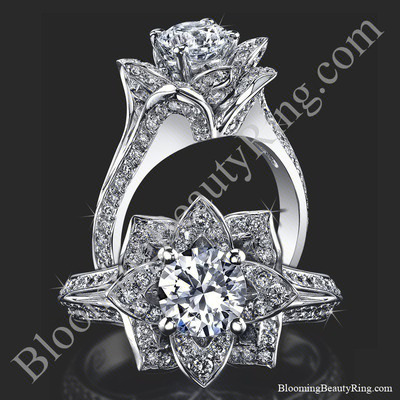 Lotus Ring 8 Petal 1.00 ct. Diamond Band Flower Ring
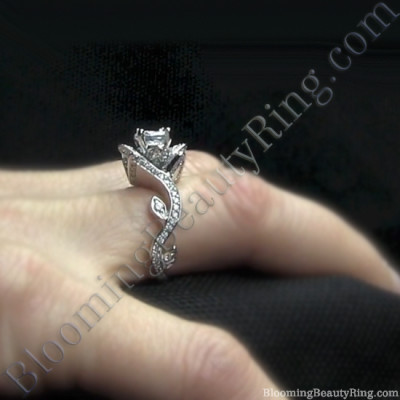 The Lotus Swan 1ct. Diamond Engagement Flower Ring
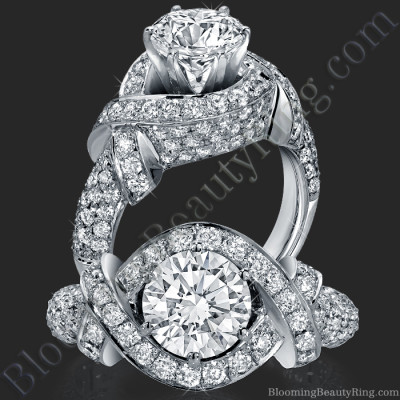 The Eternal Embrace Diamond Engagement Ring
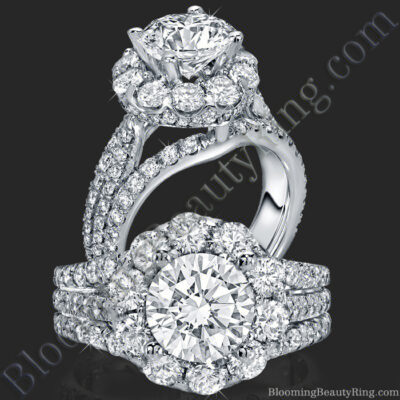 Triple Crown – Three Row Halo Diamond Engagement Ring Setting 2.15CTW
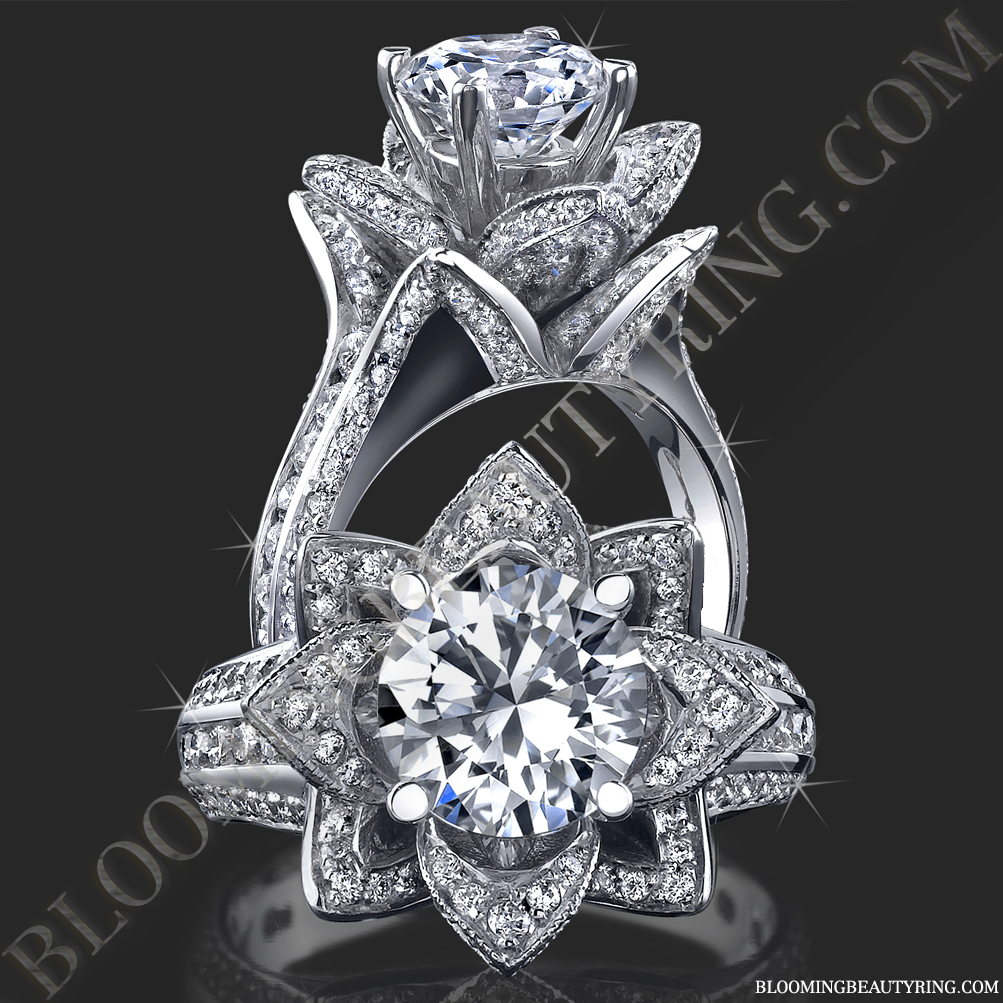 1.78 ctw. Original Large Blooming Beauty Flower Ring
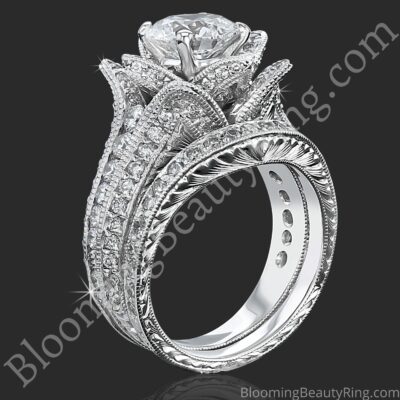 1.67 ctw. Small Hand Engraved Blooming Beauty Wedding Ring Set
Lab Grown Or Earth Mined DiamondsWhich One Is Right For You?
Both Types Of Diamonds Can Be Equally Beautiful
Blooming Beauty Ring offers both lab grown and earth mined center diamonds. We are not here to push you toward either one. Our goal is to explain the honest advantages and disadvantages of each so you can choose the diamond that is best for you.
The first thing to understand is that both are real diamonds. Both can be equally beautiful, both will last forever, and nobody can tell which one she is wearing simply by looking at her ring.
Lab Grown Diamonds
- Cost substantially less than comparable earth mined diamonds.
- May allow you to choose a much larger diamond, a higher quality diamond, spend less money, or all of the above.
- Are created by people using specialized equipment over a period of days or weeks.
- Do not have the geological rarity of a natural diamond and generally have a weaker resale market.
Earth Mined Diamonds
- Were formed by Mother Nature deep within the Earth, usually billions of years ago.
- Offer natural rarity, ancient history and the tradition many people associate with diamond jewelry.
- Have a more established resale market.
- Cost substantially more, which means the same budget will usually buy a smaller diamond, lower quality grades or both.
Most diamonds of either type should not be considered a financial investment. The better choice is the one that fits your preferences, priorities and budget.