
~ Diamond Terminology from A to Z ~
There are thousands of terms being used in today's jewelry industry. Some common knowledge, others are obscure and baffling. We've created a database of terminology from A to Z to make it easy, and of course if you still have questions, please do not hesitate to send us an email or give us a call.
Hallmark, Hallmarked, Hallmarking
Starting in the 18th century, Hallmarking was a way to put a legal marked stamp on something to signify it's purity. In cases of minerals like gold you'll see 10K, 14K, 18K, or 22K stamped on the inside. A diamond, for instance, might be hallmarked by GIA by lasering in an identification number in the diamond itself, so it could always be recognized especially if it was stolen.
Hardness
When dealing with minerals or gems the hardness relates to the resistance the gem can withstand when it comes to scratching. In a diamond's case it relates to the resistance it can withstand on a smooth surface. The hardness is scaled on a system called Mohs. The Mohs scale tells which gems can actually be scratched. Each mineral below can scratch the ones above it, however the above can not be scratched by the ones below it. The scale is rated from 1 being the softest and 10 being the strongest. The scale works in this order:
1) Talc
2) Gypsum
3) Calcite
4) Fluorite
5) Apatite
6) Orthoclase
7) Quartz
8) Topaz
9) Corundum
10) Diamond
The only thing that can cut a diamond IS a diamond. The hardest substance on Earth, that we know of.
Heart Cut
A fancy cut diamond that's cut into the shape of a heart.
Hearts and Arrows, H&A
The most perfectly cut diamond pattern there is. Perfectly symmetrical in all 58 facets. All perfectly aligned. All magnify light perfectly! The light enters in and has no place left to go, but back out the top creating unbelievable brilliance! Only a few diamond cutters in the world can create such a masterpiece, and that is why this particular cut is among the most expensive you'll ever find, and if you have the money, quite worth it. Hearts and Arrows can only be done in a round brilliant shape. The reason it's called Hearts and Arrows is because under certain light, or illumination if you will, you will see a pattern of arrows and in between those arrows you'll see patterns of hearts. If you've seen this, then you've seen perfection when it comes to diamond cutting.
Head
The center or side stones need to be secure on the setting. The Head is the prong like objects that accomplish this task.
High Polish
A gem or diamond that has been polished to a mirror like image. Some say you could very easily see your reflection.
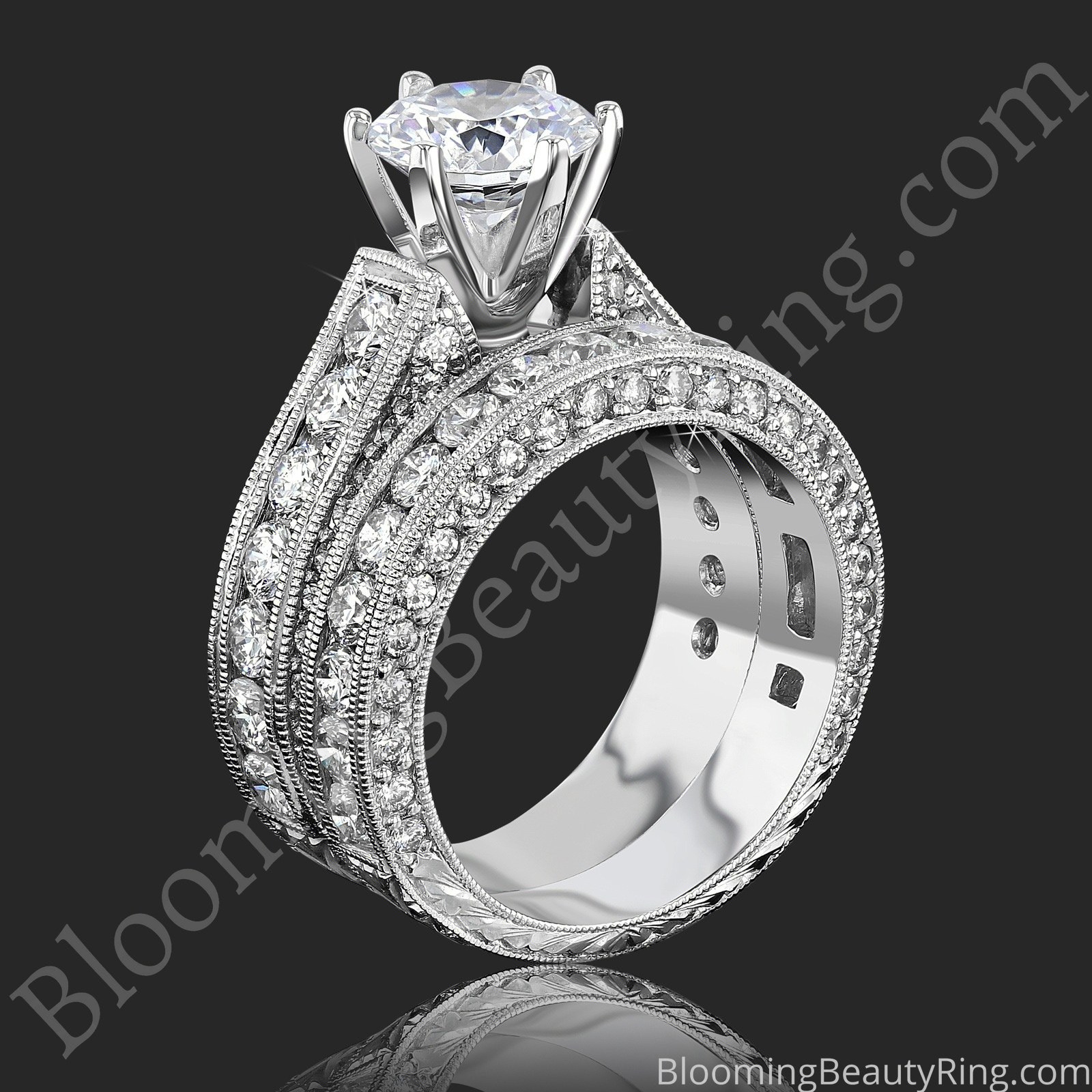 The Lattice Arch – Engraved Diamond Wedding Ring Set
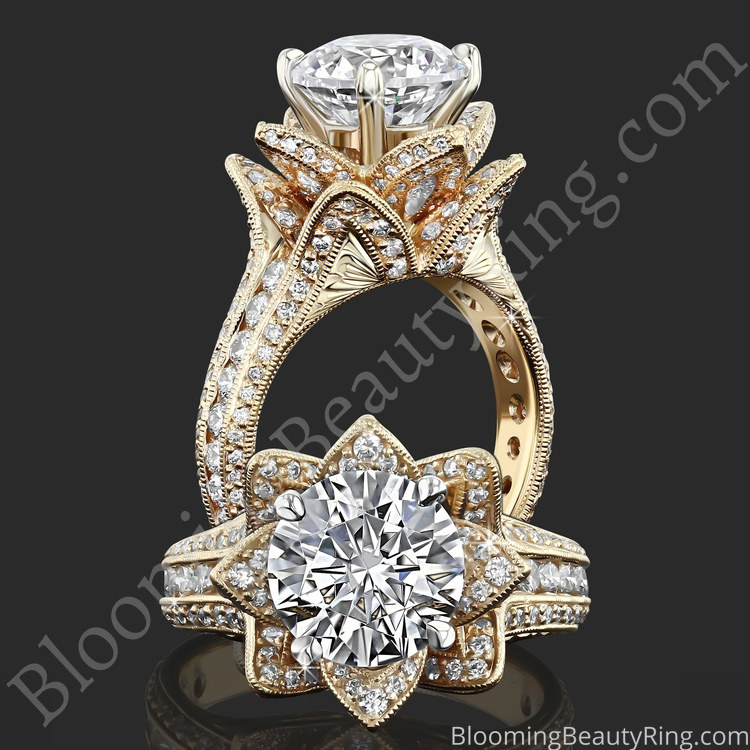 1.78ctw Yellow Gold Large Hand Engraved Blooming Beauty Flower Diamond Engagement Ring
 The Show Stopper – 2.0 ctw Statement Diamond Engagement Ring Setting
 La Bella – Ornamental Filigree Diamond Halo Engagement Ring
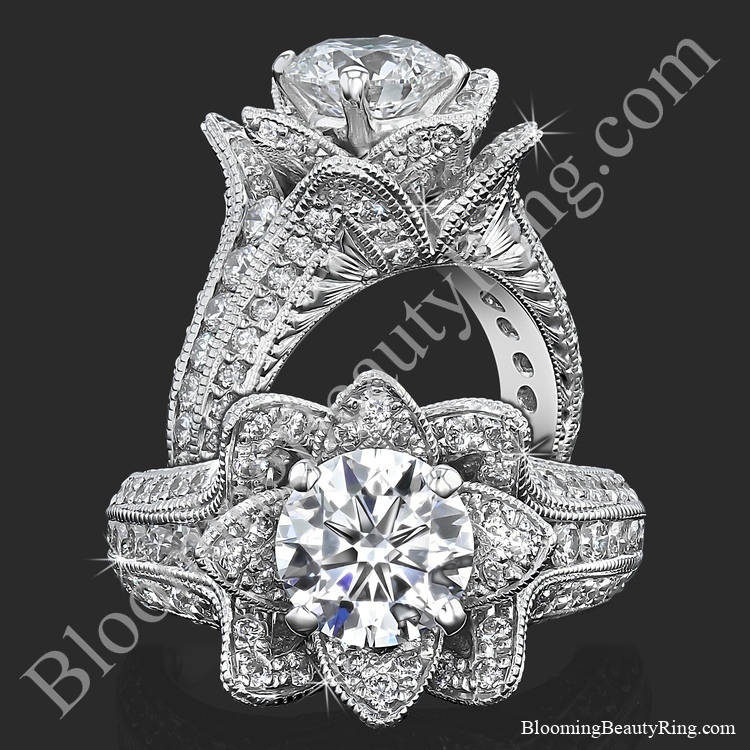 1.37 ctw. Small Hand Engraved Blooming Beauty Engagement Ring
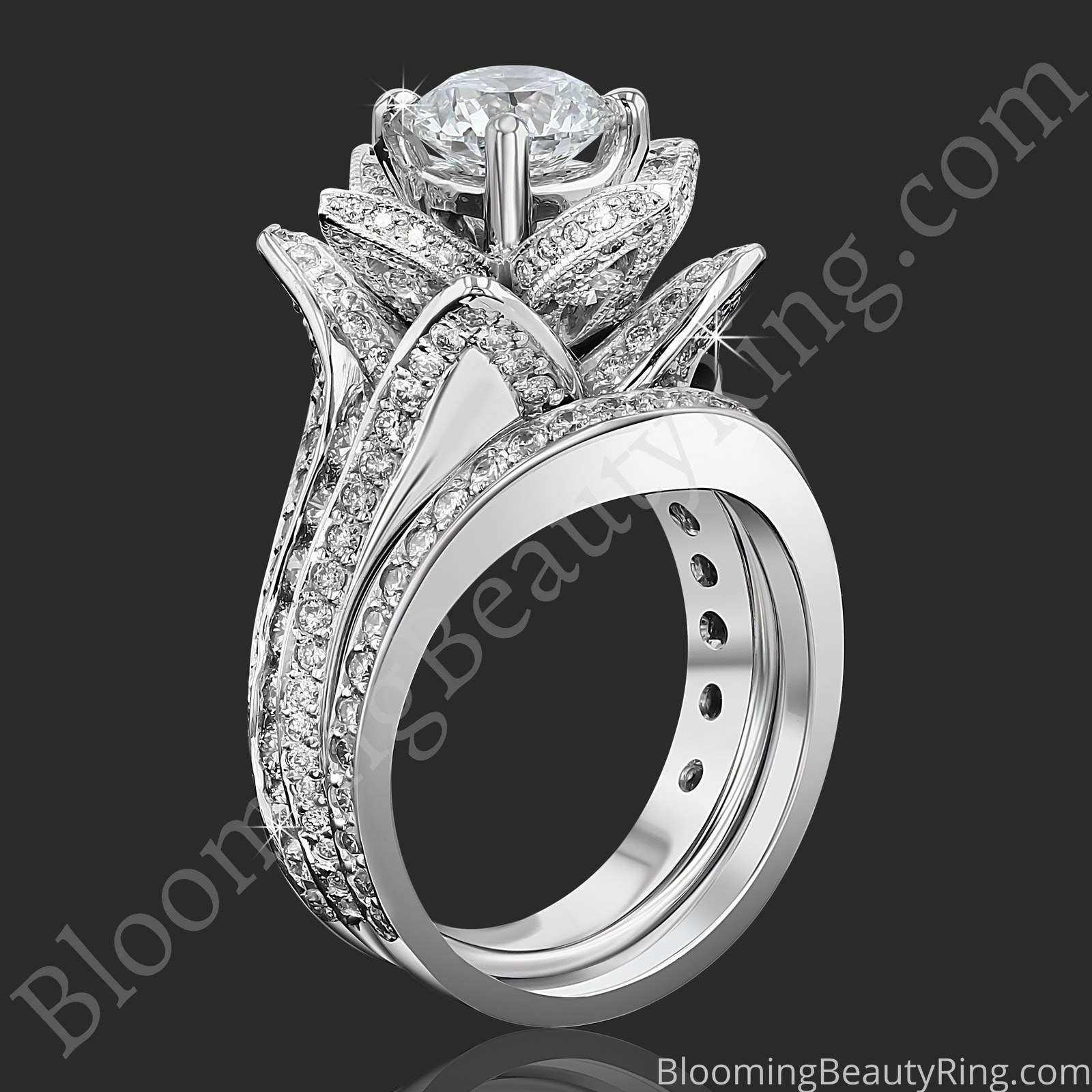 2.08 ctw. Original Large Blooming Beauty Flower Ring Set
 Diamond Embossed Blooming Rose Engagement Ring with Etched Carvings
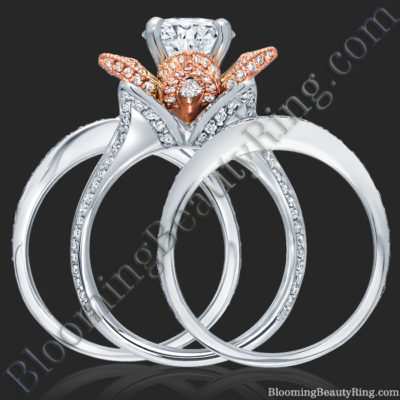 2.38 ctw. Double Band Two Toned White and Rose Gold Flower Ring Set
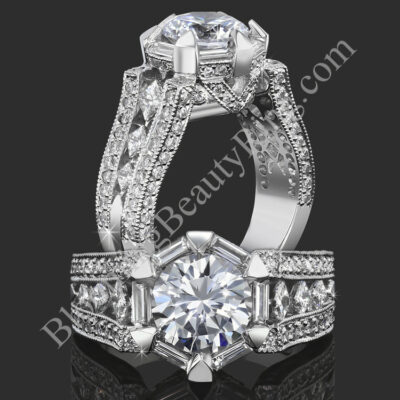 The Queens Crown Low Profile Vintage Inspired Round Engagement Ring
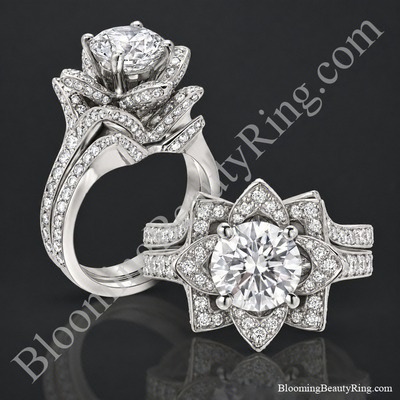 The Large Crimson Rose Flower Diamond Engagement Ring Set
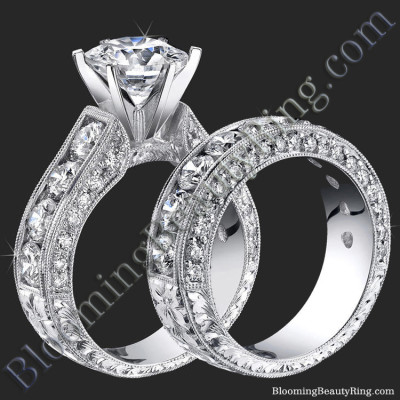 Spectacular 4.20 ctw. Top Quality Round Diamond Engagement Ring Set
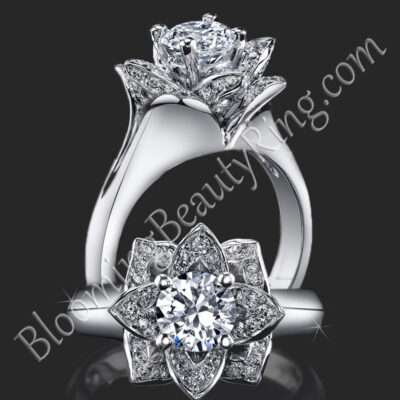 Lotus Ring 8 Petal .58 ct. Diamond Clean Split Shank Flower Ring
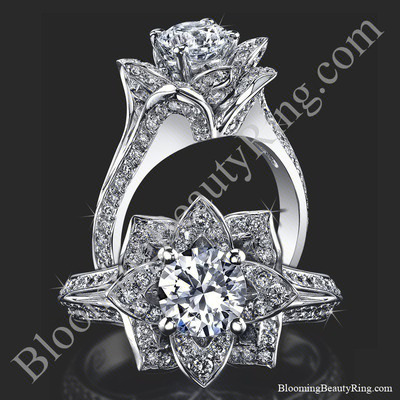 Lotus Ring 8 Petal 1.00 ct. Diamond Band Flower Ring
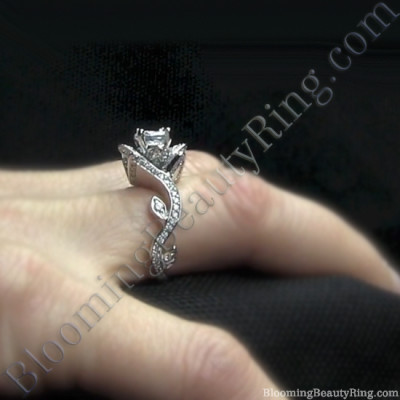 The Lotus Swan 1ct. Diamond Engagement Flower Ring
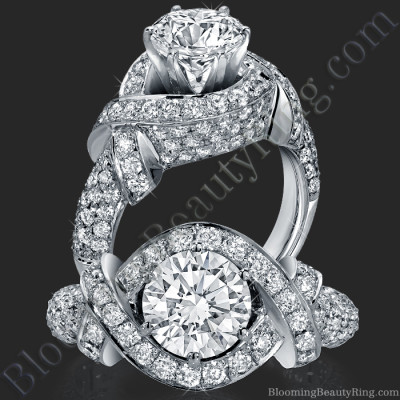 The Eternal Embrace Diamond Engagement Ring
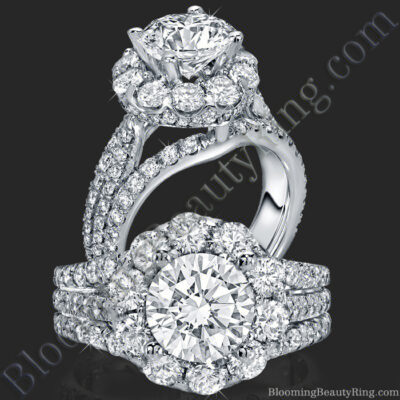 Triple Crown – Three Row Halo Diamond Engagement Ring Setting 2.15CTW
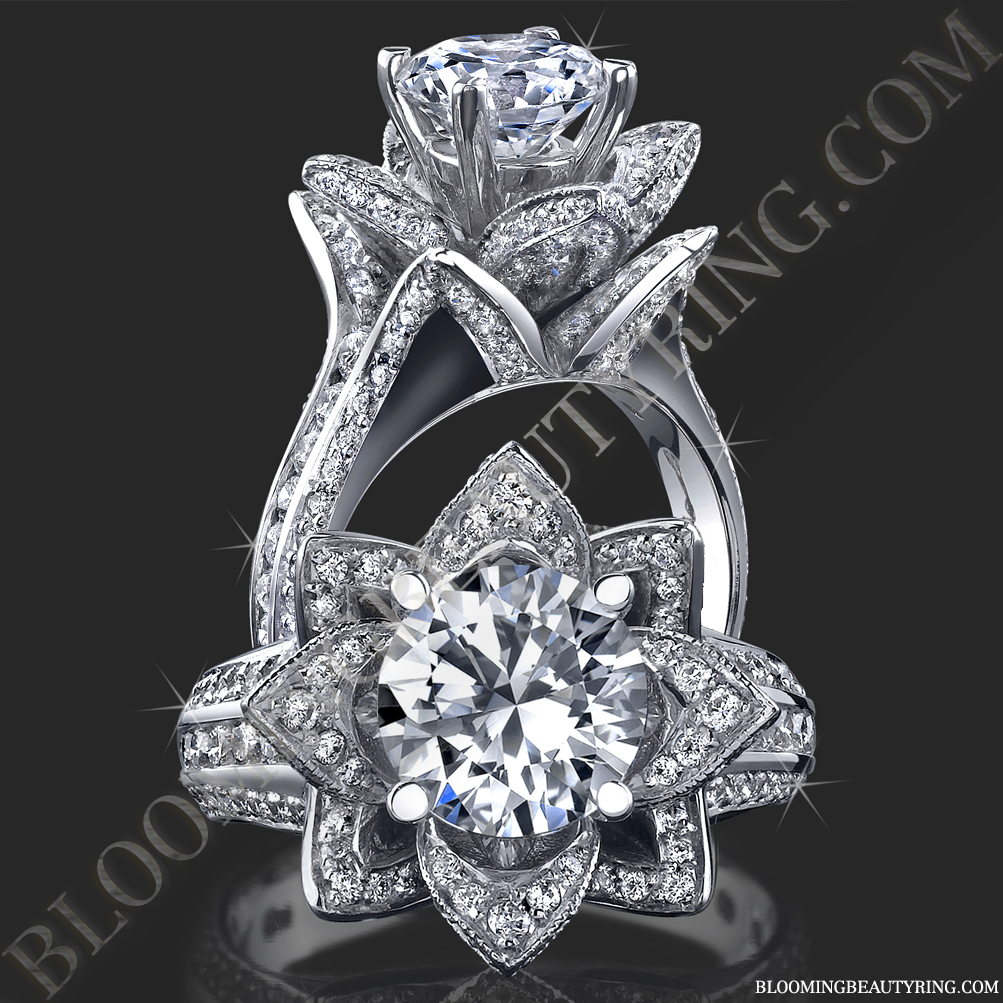 1.78 ctw. Original Large Blooming Beauty Flower Ring
 1.67 ctw. Small Hand Engraved Blooming Beauty Wedding Ring Set
Lab Grown Or Earth Mined DiamondsWhich One Is Right For You?
Both Types Of Diamonds Can Be Equally Beautiful
Blooming Beauty Ring offers both lab grown and earth mined center diamonds. We are not here to push you toward either one. Our goal is to explain the honest advantages and disadvantages of each so you can choose the diamond that is best for you.
The first thing to understand is that both are real diamonds. Both can be equally beautiful, both will last forever, and nobody can tell which one she is wearing simply by looking at her ring.
Lab Grown Diamonds
- Cost substantially less than comparable earth mined diamonds.
- May allow you to choose a much larger diamond, a higher quality diamond, spend less money, or all of the above.
- Are created by people using specialized equipment over a period of days or weeks.
- Do not have the geological rarity of a natural diamond and generally have a weaker resale market.
Earth Mined Diamonds
- Were formed by Mother Nature deep within the Earth, usually billions of years ago.
- Offer natural rarity, ancient history and the tradition many people associate with diamond jewelry.
- Have a more established resale market.
- Cost substantially more, which means the same budget will usually buy a smaller diamond, lower quality grades or both.
Most diamonds of either type should not be considered a financial investment. The better choice is the one that fits your preferences, priorities and budget.