
~ Diamond Terminology from A to Z ~
There are thousands of terms being used in today's jewelry industry. Some common knowledge, others are obscure and baffling. We've created a database of terminology from A to Z to make it easy, and of course if you still have questions, please do not hesitate to send us an email or give us a call.
Dahlia Cut
One of the "Flower Cuts" developed by Gaby Tolkowsky around 1997 for De Beers.
De Beers
Huge Corporation the has successfully controlled a large majority of the world diamond market for most of it's existence. (Some say a monopoly)
Deep
Refers to a Gem that has been cut with proportions that are not ideal. (The opposite of shallow) A deep cut diamond can weigh the same as an ideal cut diamond, but may not have the same brilliance. (Due to the facets not being properly aligned for light reflection) The same can be true for a shallow cut diamond. Often the size of a deep cut stone may appear smaller because the weight of the stone is dispersed vertically. The opposite can be true for a shallow cut.
If you're looking to purchase a diamond it's incredibly important you read Diamond Cuts.
Depth
Depth refers to the measurement of a diamond, from top to bottom. The depth helps determine if a diamond is cut to ideal, deep, or shallow proportions. This measurement is particularly important for round brilliant cut diamonds.
Detection
Usually referring to a "detection" device to determine if a diamond is genuine.
Diamond
A clear gemstone composed of pure crystallized carbon which has been extremely compressed over millions of years. Diamonds are the hardest substance known to man with a rating of 10 on the Mohs Scale. Diamond are valued based on the 4c's. Cut, Clarity, Color, Carat. Diamonds are the birthstone of April.
Interesting Note:
Diamonds are considered one of the most rare, and precious gems on the planet, when in reality there's an incredible over abundance of the gem. Most are just being stored and released on a periodical basis to keep pricing and demand high.
Dinner Ring
Another name for Cocktail Ring
Dispersion
The light refracted within a polished diamond. Depending on the cut of the diamond the refractive property, or fire if you will be heightened or lessened. Dispersion, Cut and Brilliance go hand in hand, and you will definitely see the difference.
Doublet
The combination of two or more very expensive rings or diamonds to make it appear that the top gem is much better in clarity and color due to light or color coming from the bottom stone.
DWT
The international symbol for pennyweight. According to Webster it's 1/20th of a troy ounce or 1.5 grams.
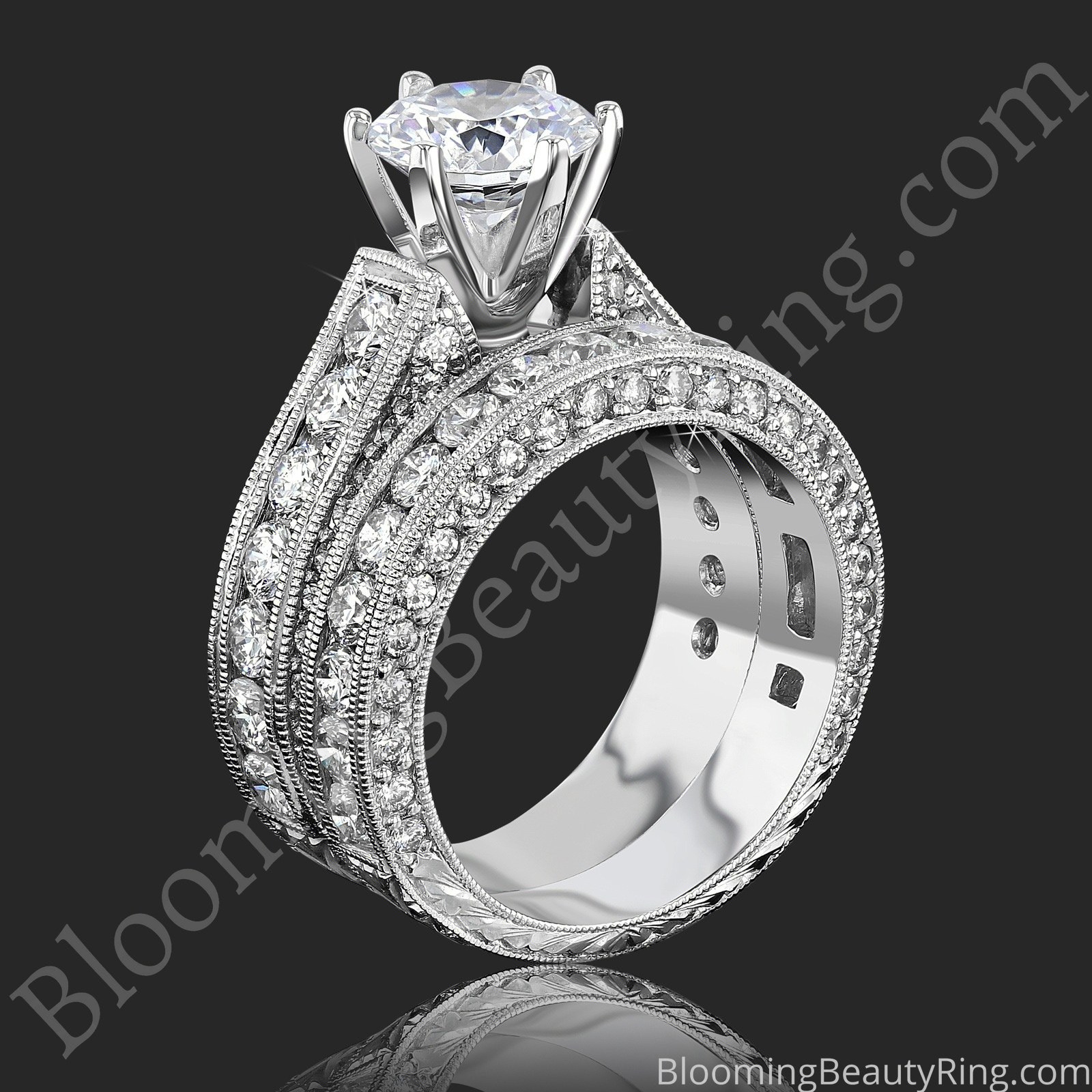 The Lattice Arch – Engraved Diamond Wedding Ring Set
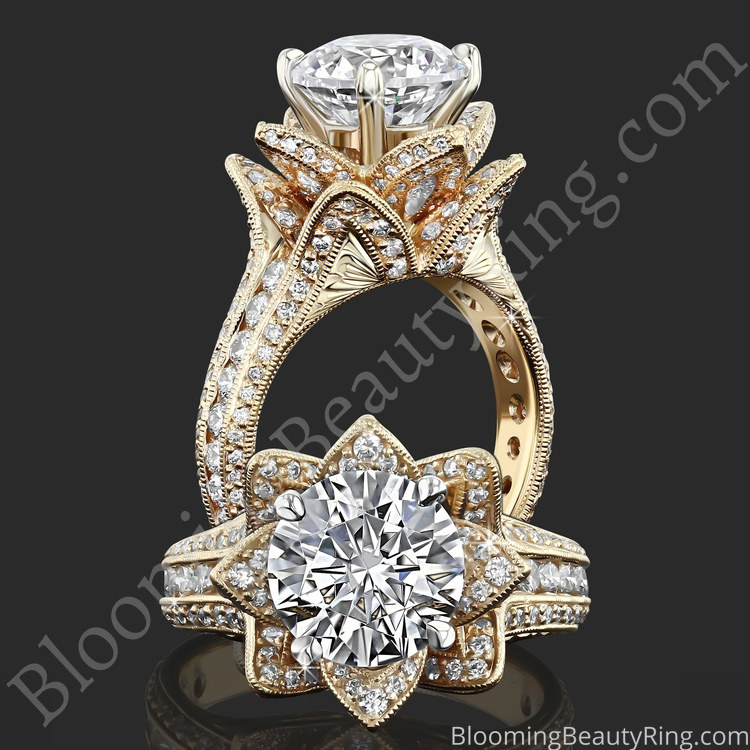 1.78ctw Yellow Gold Large Hand Engraved Blooming Beauty Flower Diamond Engagement Ring
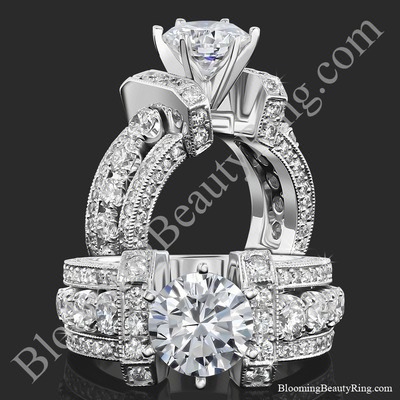 The Show Stopper – 2.0 ctw Statement Diamond Engagement Ring Setting
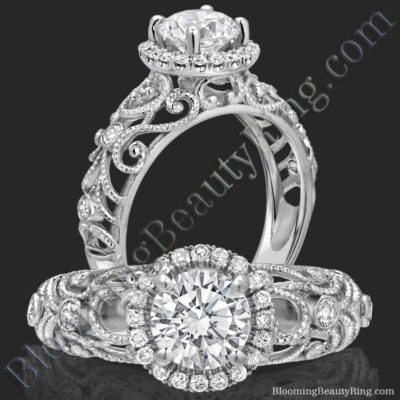 La Bella – Ornamental Filigree Diamond Halo Engagement Ring
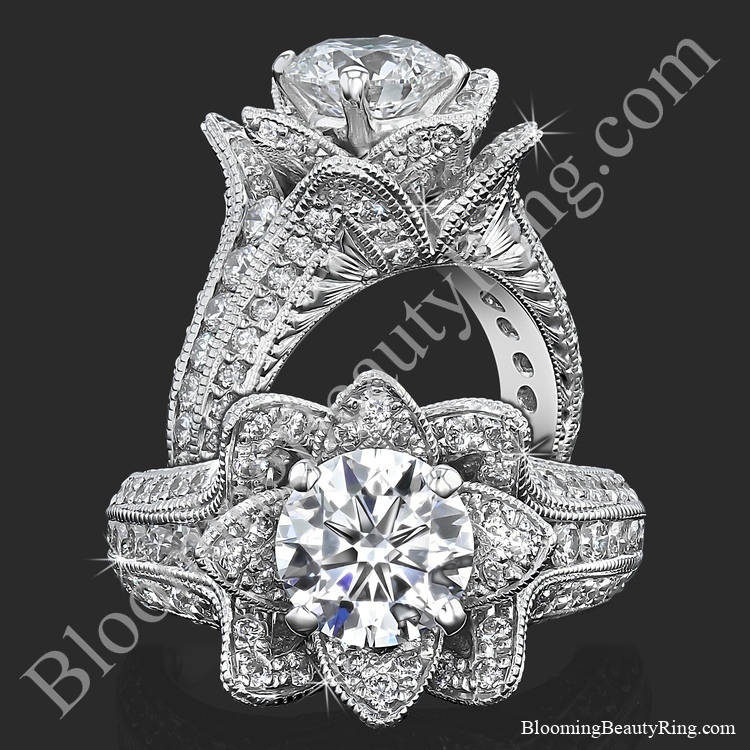 1.37 ctw. Small Hand Engraved Blooming Beauty Engagement Ring
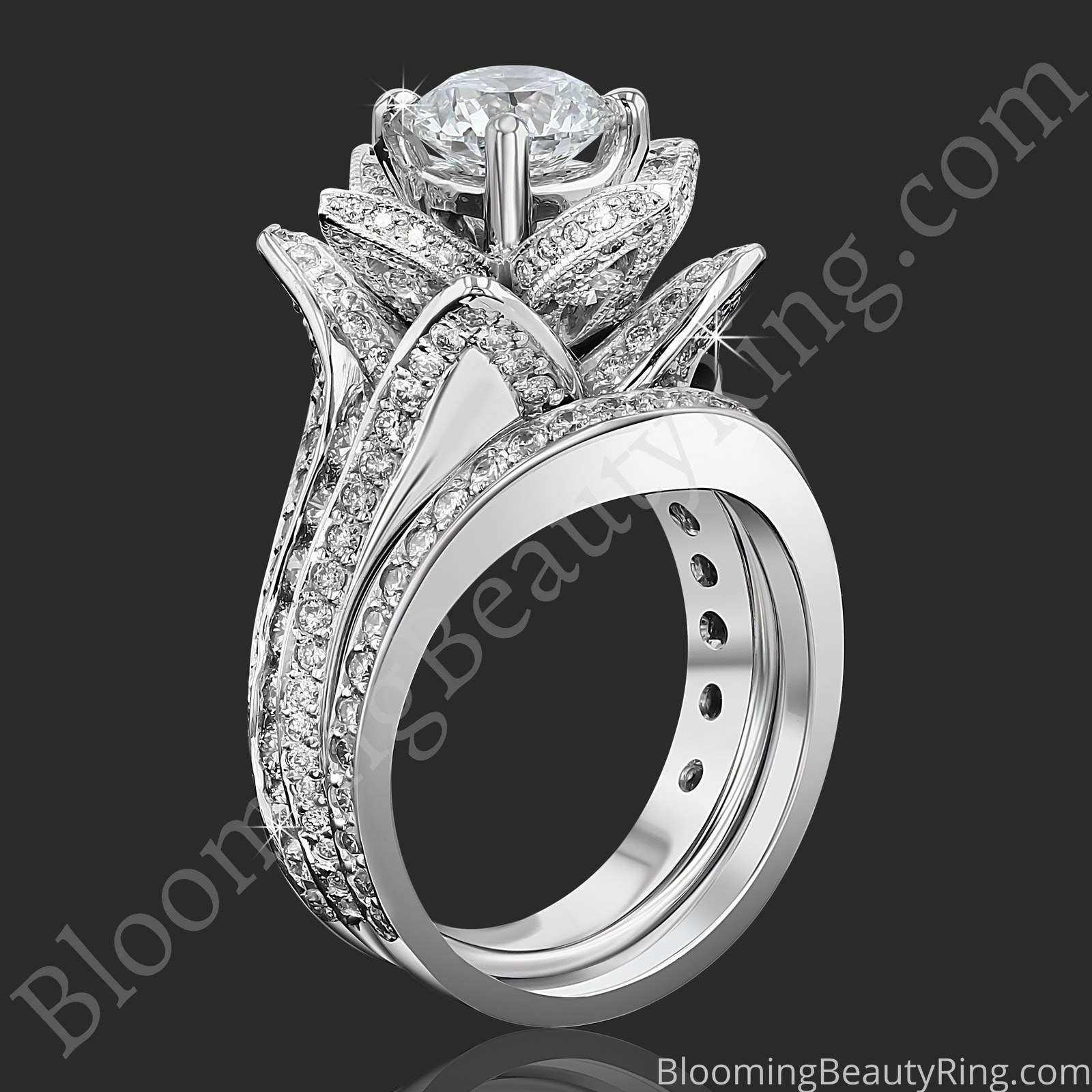 2.08 ctw. Original Large Blooming Beauty Flower Ring Set
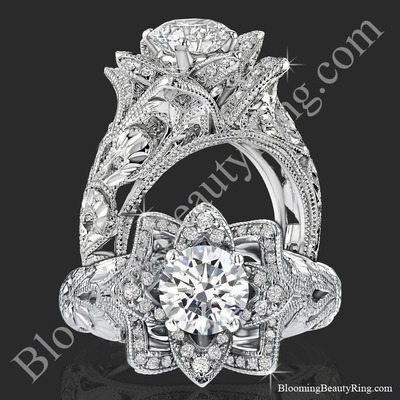 Diamond Embossed Blooming Rose Engagement Ring with Etched Carvings
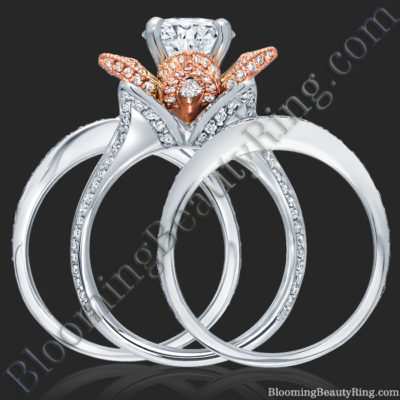 2.38 ctw. Double Band Two Toned White and Rose Gold Flower Ring Set
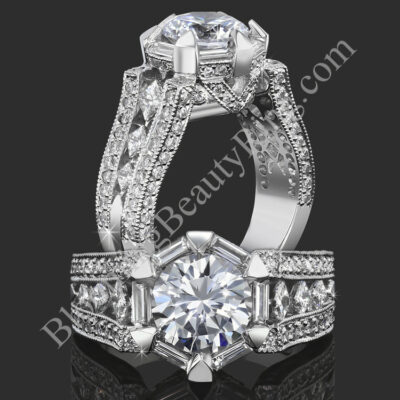 The Queens Crown Low Profile Vintage Inspired Round Engagement Ring
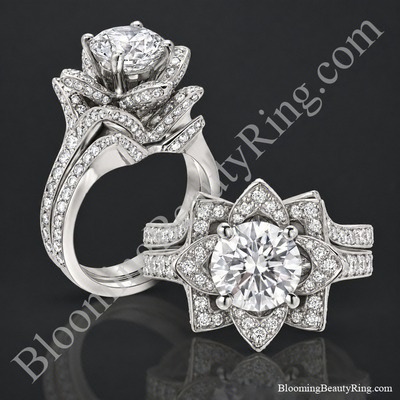 The Large Crimson Rose Flower Diamond Engagement Ring Set
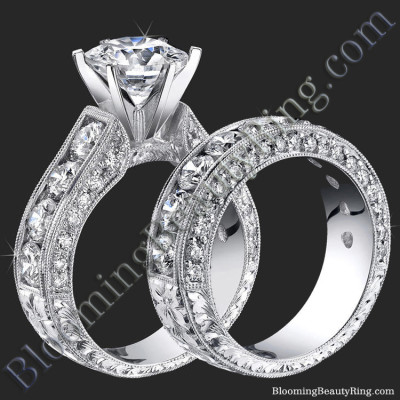 Spectacular 4.20 ctw. Top Quality Round Diamond Engagement Ring Set
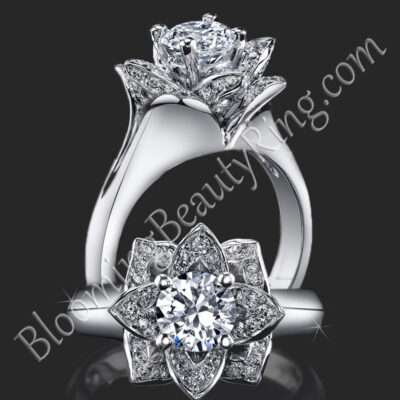 Lotus Ring 8 Petal .58 ct. Diamond Clean Split Shank Flower Ring
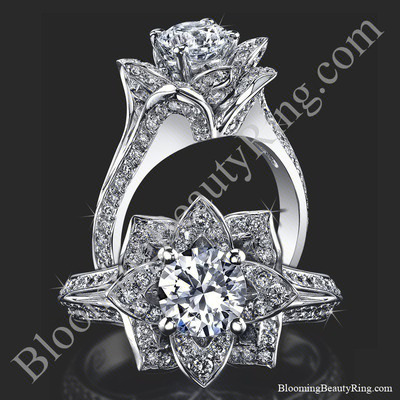 Lotus Ring 8 Petal 1.00 ct. Diamond Band Flower Ring
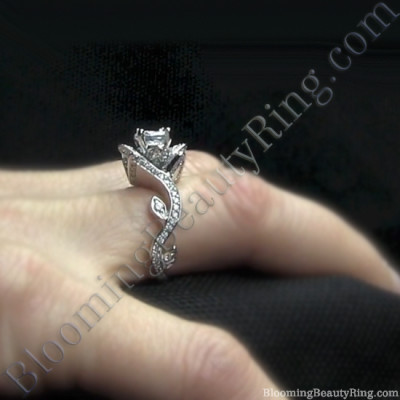 The Lotus Swan 1ct. Diamond Engagement Flower Ring
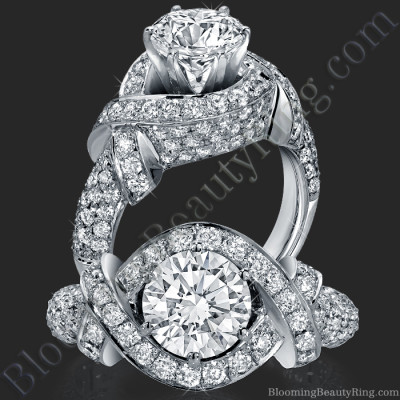 The Eternal Embrace Diamond Engagement Ring
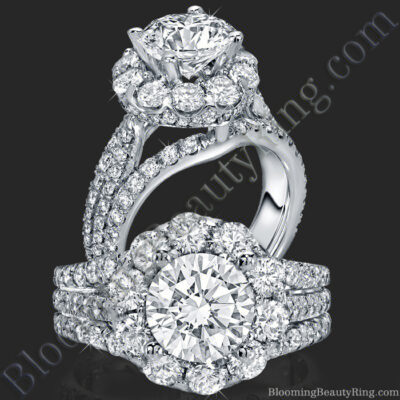 Triple Crown – Three Row Halo Diamond Engagement Ring Setting 2.15CTW
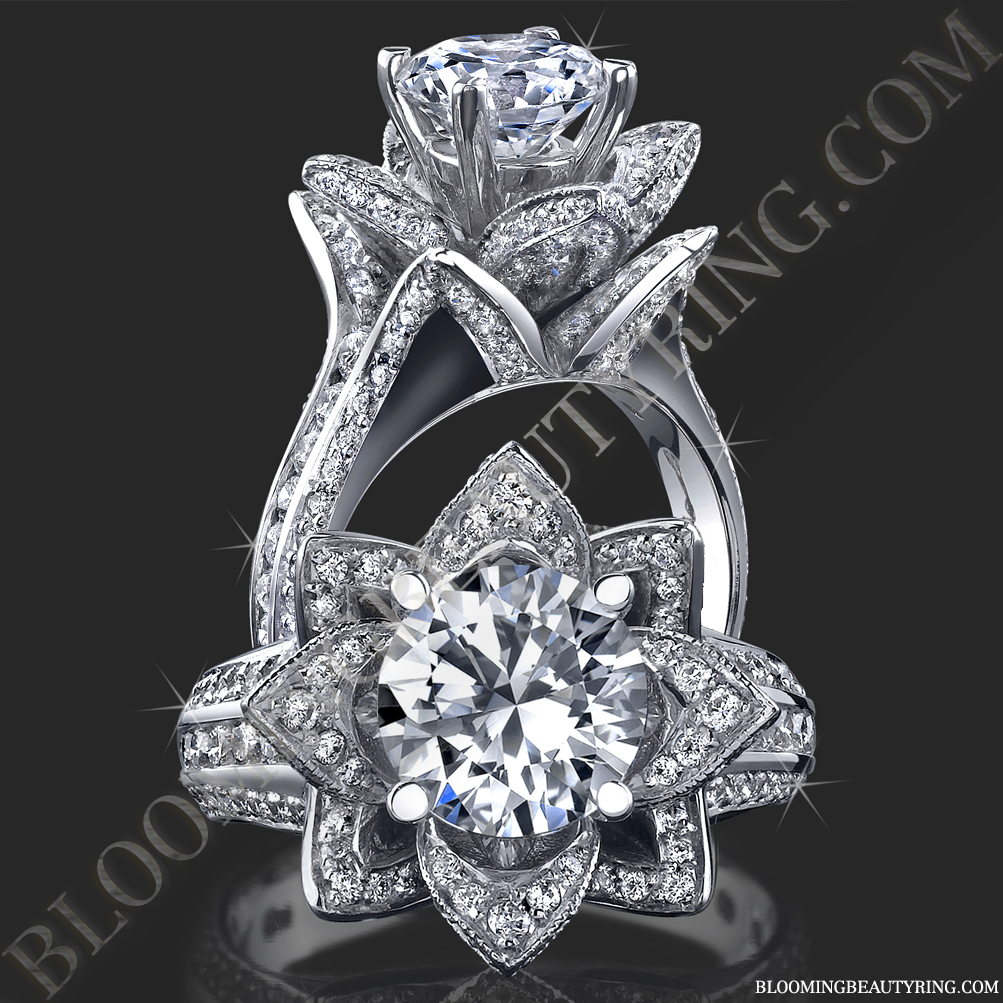 1.78 ctw. Original Large Blooming Beauty Flower Ring
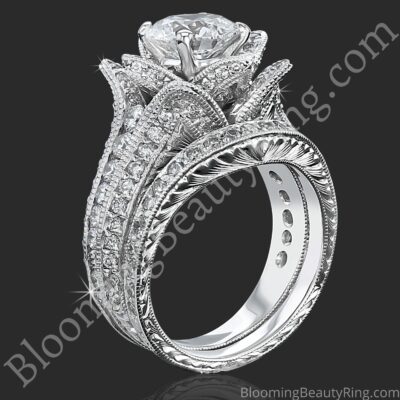 1.67 ctw. Small Hand Engraved Blooming Beauty Wedding Ring Set
Lab Grown Or Earth Mined DiamondsWhich One Is Right For You?
Both Types Of Diamonds Can Be Equally Beautiful
Blooming Beauty Ring offers both lab grown and earth mined center diamonds. We are not here to push you toward either one. Our goal is to explain the honest advantages and disadvantages of each so you can choose the diamond that is best for you.
The first thing to understand is that both are real diamonds. Both can be equally beautiful, both will last forever, and nobody can tell which one she is wearing simply by looking at her ring.
Lab Grown Diamonds
- Cost substantially less than comparable earth mined diamonds.
- May allow you to choose a much larger diamond, a higher quality diamond, spend less money, or all of the above.
- Are created by people using specialized equipment over a period of days or weeks.
- Do not have the geological rarity of a natural diamond and generally have a weaker resale market.
Earth Mined Diamonds
- Were formed by Mother Nature deep within the Earth, usually billions of years ago.
- Offer natural rarity, ancient history and the tradition many people associate with diamond jewelry.
- Have a more established resale market.
- Cost substantially more, which means the same budget will usually buy a smaller diamond, lower quality grades or both.
Most diamonds of either type should not be considered a financial investment. The better choice is the one that fits your preferences, priorities and budget.