
~ Diamond Terminology from A to Z ~
There are thousands of terms being used in today's jewelry industry. Some common knowledge, others are obscure and baffling. We've created a database of terminology from A to Z to make it easy, and of course if you still have questions, please do not hesitate to send us an email or give us a call.
Abrasion
Tiny nicks along diamond facet junctions, that produce white fuzzy lines instead of sharp, crisp facet edges.
Abrasive
Diamonds of Industrial grade are used as abrasives for tools such as drill bits and grinding wheels. Smaller particles may also be used for polishing.
Adamant Research Laboratory
Established by DeBeers in 1956 to research diamond synthesis. De Beers produced their first synthetic in 1958.
Adamantine
Refers to the surface luster of a diamond.
Adamas
The word diamond is derived from the ancient Greek word Adamas. It means unconquerable.
Africa
Africa and De Beers dominated production through the 20th century. Mining activity was centered in Botswana and South Africa. Although Africa is still a large source of diamonds, Several other sources have been discovered in places like Russia, Canada and Australia.
American Gem Society (AGS)
According to it's website, AGS was established in 1934 with a vision to create an association of fine jewelry retailers dedicated to establishing and maintaining the highest possible standards for business ethics and professionalism in the jewelry industry.
Anglo American Corporation
Founded in 1917 by Sir Ernest Oppenheimer to exploit the Gold Mining potential of the East Rand. Owns approximately 45% of De Beers.
Amsterdam
Major Diamond Cutting Center in the 19th century. Amsterdam lost a significant portion of their diamond cutters in the pre-war years, due in part to strict working conditions imposed by labor unions on the Dutch Diamond cutting factories.
Allnatt
A 102 carat "Cushion Cut" Diamond certified by the Gemological Institute Of America (GIA) to be a "Fancy Vivid Yellow" color Diamond with a VS2 clarity rating.
Alluvial
Diamonds that have been washed into and remain in a deposit of clay, silt, and sand left by flowing water in a river valley or delta. Alluvial diamonds are usually Gem Quality.
Angles
Angles determine a diamonds proportions and symmetry. Cutting angles to the proper-specific formula will help achieve maximum fire and brilliance.
Angola
Diamonds were first discovered in Angola in 1913. This country is rich with Gem Quality deposits. A long outbreak of Armed Conflicts have hampered it's diamond output for many years. 2002 brought some relief to the armed conflicts and Angola could become a larger supplier of diamonds.
Anniversaries
De Beers invented and promoted the anniversary band and eternity ring concepts.
Antwerp-Antwerpen-Anvers
A Major International Diamond trading center. In existence since about the 1300's.
Antwerp Diamond Bank
Antwerp Diamond Bank was founded in 1934 by three leading Belgian Banks and a holding company owned by De Beers Group, called Henfin. It currently has offices in Antwerp, Geneva, New York, Hong Kong, and Dubai.
Antwerp Diamond Bourse
One of Several Bourses for diamond dealers to trade in mostly polished diamonds.
Antwerp Rose
A hexagonal rose cut diamond with 12 upper facets and a flat base facet.
Appraisal
Rough and Polished diamonds are appraised at many stages in order to determine their quality and value. Appraisals also apply to finished jewelry, as well. Such as our unique engagement rings.
Argyle
The Argyle Mine is located in Australia and was opened in 1985. 650 million carats have been produced by open cast mining and the Argyle mine is famous for "Fancy Colored Diamonds".
Arrows And Hearts
A term used to describe a pattern that is visible in an Ideal Cut Diamond due to precise cutting standards.
Australia
In 1851 Diamonds were discovered here. Australia is now a major producer of rough diamonds and is possibly the largest producer in terms of sheer volume.
Ayer
The Ad agency that created the slogan "A Diamond Is Forever" for De Beers.
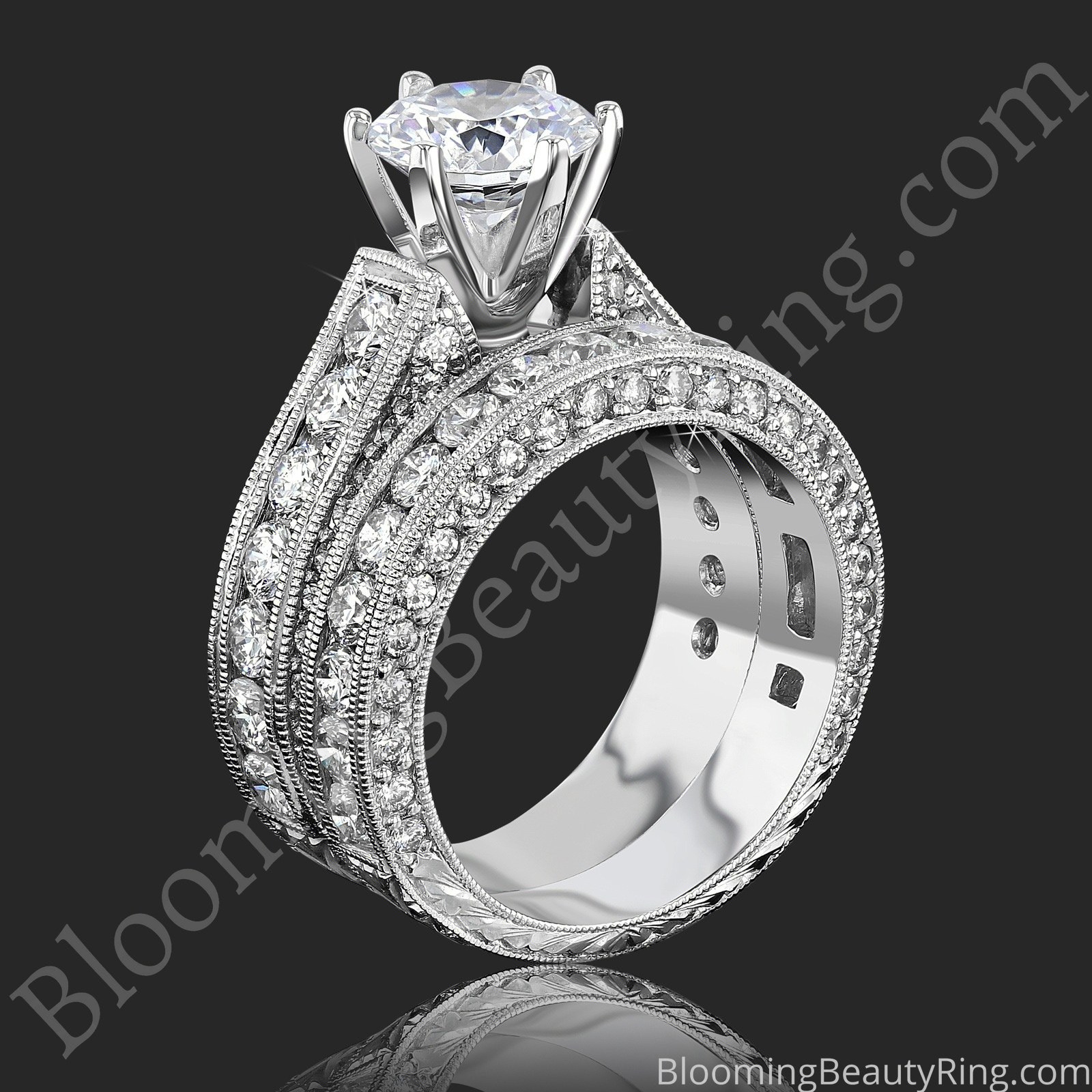 The Lattice Arch – Engraved Diamond Wedding Ring Set
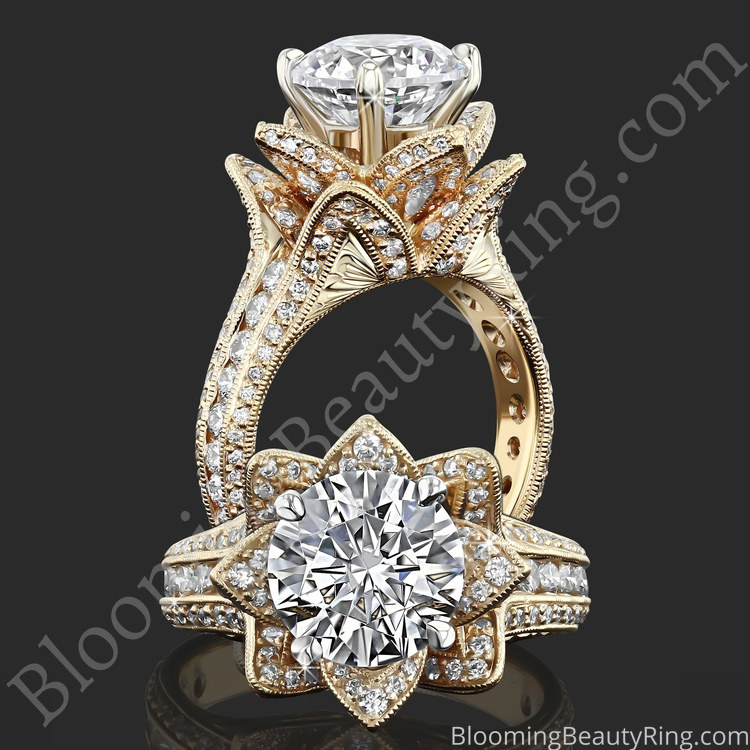 1.78ctw Yellow Gold Large Hand Engraved Blooming Beauty Flower Diamond Engagement Ring
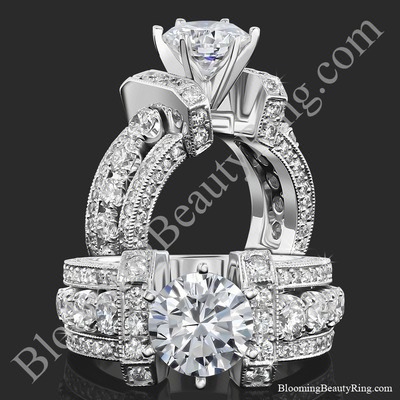 The Show Stopper – 2.0 ctw Statement Diamond Engagement Ring Setting
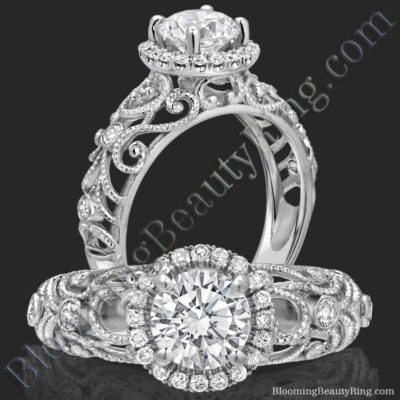 La Bella – Ornamental Filigree Diamond Halo Engagement Ring
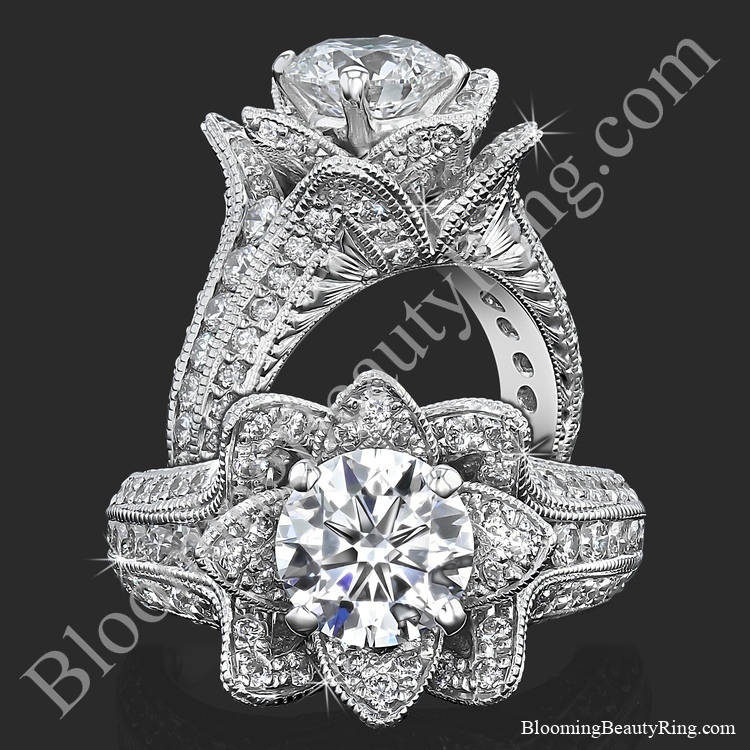 1.37 ctw. Small Hand Engraved Blooming Beauty Engagement Ring
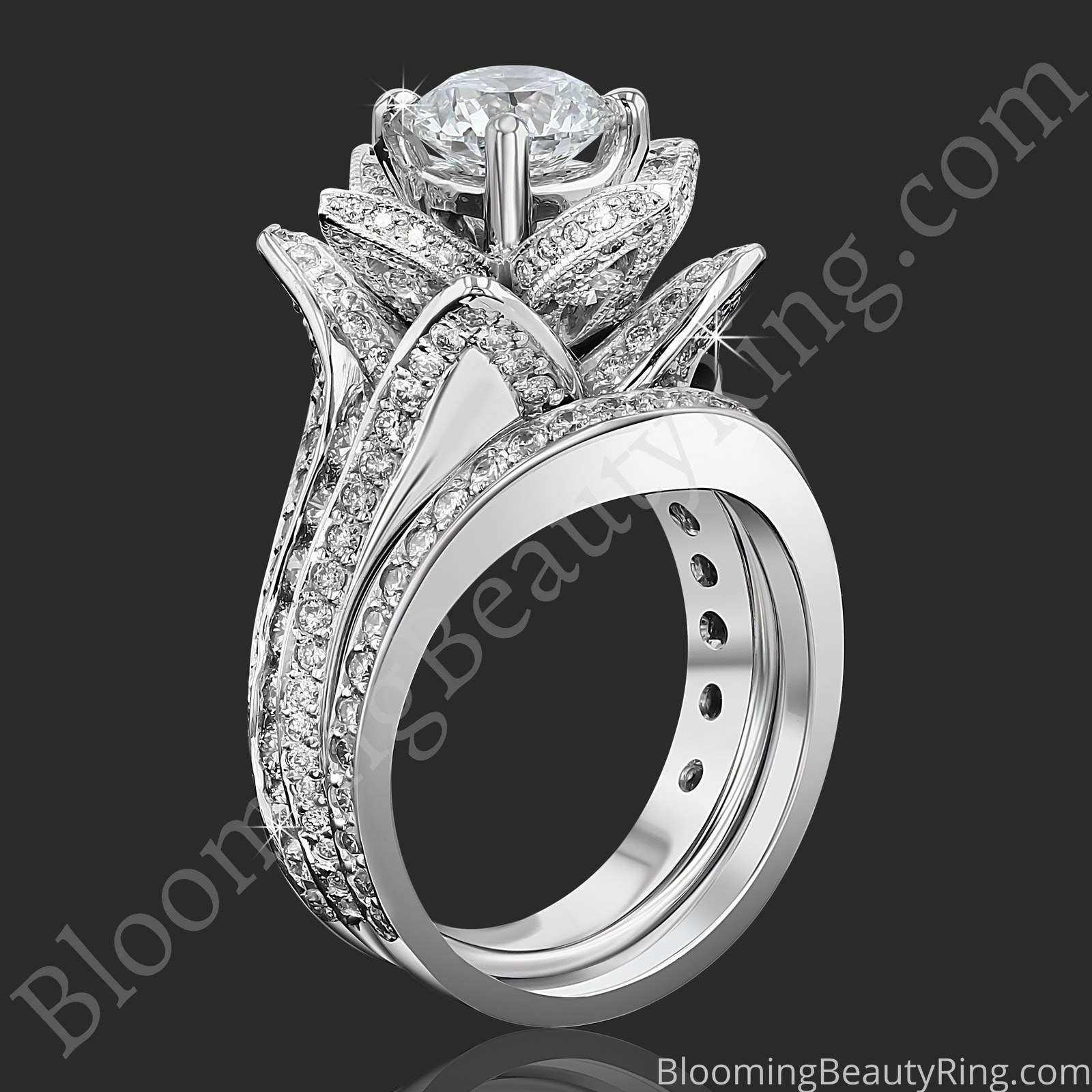 2.08 ctw. Original Large Blooming Beauty Flower Ring Set
 Diamond Embossed Blooming Rose Engagement Ring with Etched Carvings
 2.38 ctw. Double Band Two Toned White and Rose Gold Flower Ring Set
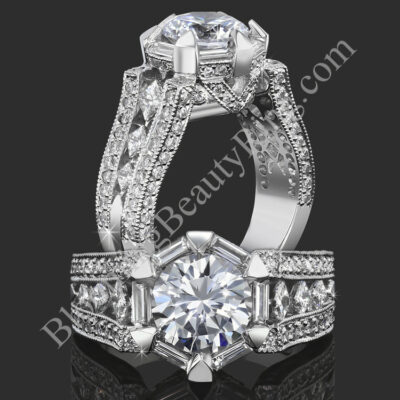 The Queens Crown Low Profile Vintage Inspired Round Engagement Ring
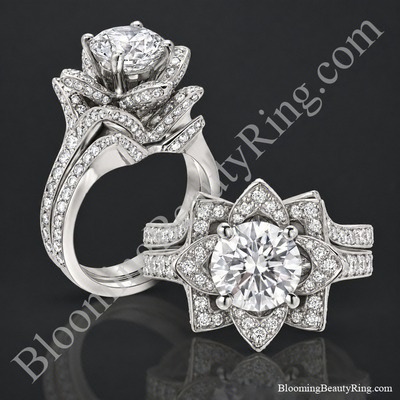 The Large Crimson Rose Flower Diamond Engagement Ring Set
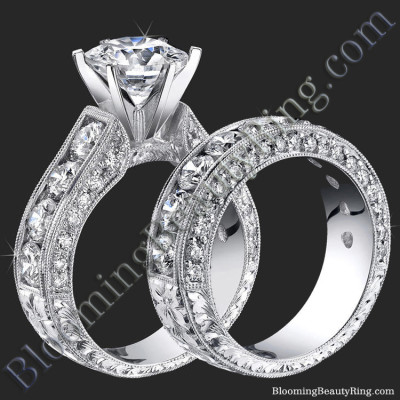 Spectacular 4.20 ctw. Top Quality Round Diamond Engagement Ring Set
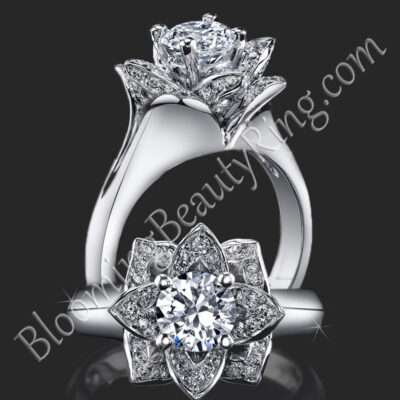 Lotus Ring 8 Petal .58 ct. Diamond Clean Split Shank Flower Ring
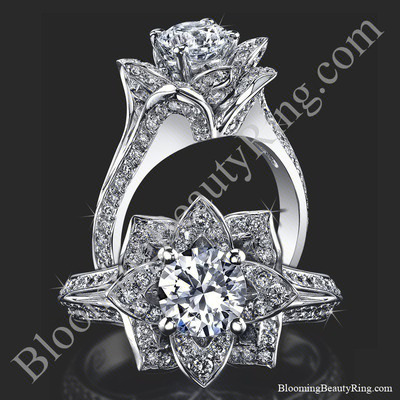 Lotus Ring 8 Petal 1.00 ct. Diamond Band Flower Ring
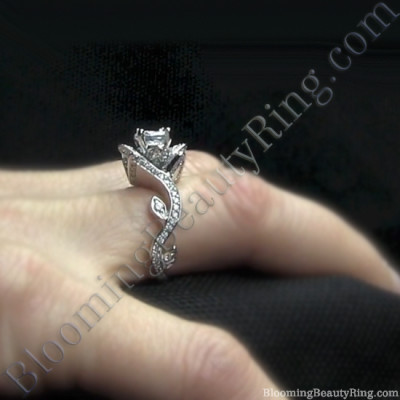 The Lotus Swan 1ct. Diamond Engagement Flower Ring
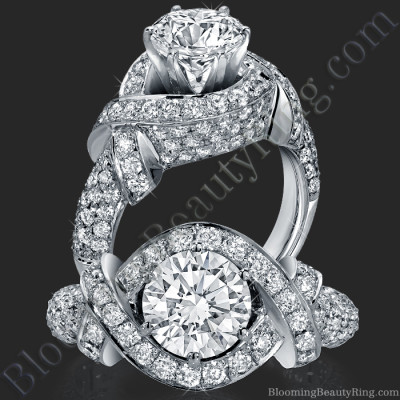 The Eternal Embrace Diamond Engagement Ring
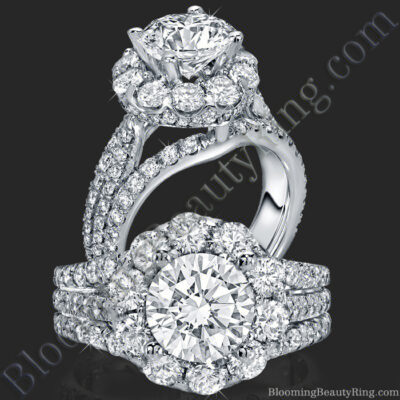 Triple Crown – Three Row Halo Diamond Engagement Ring Setting 2.15CTW
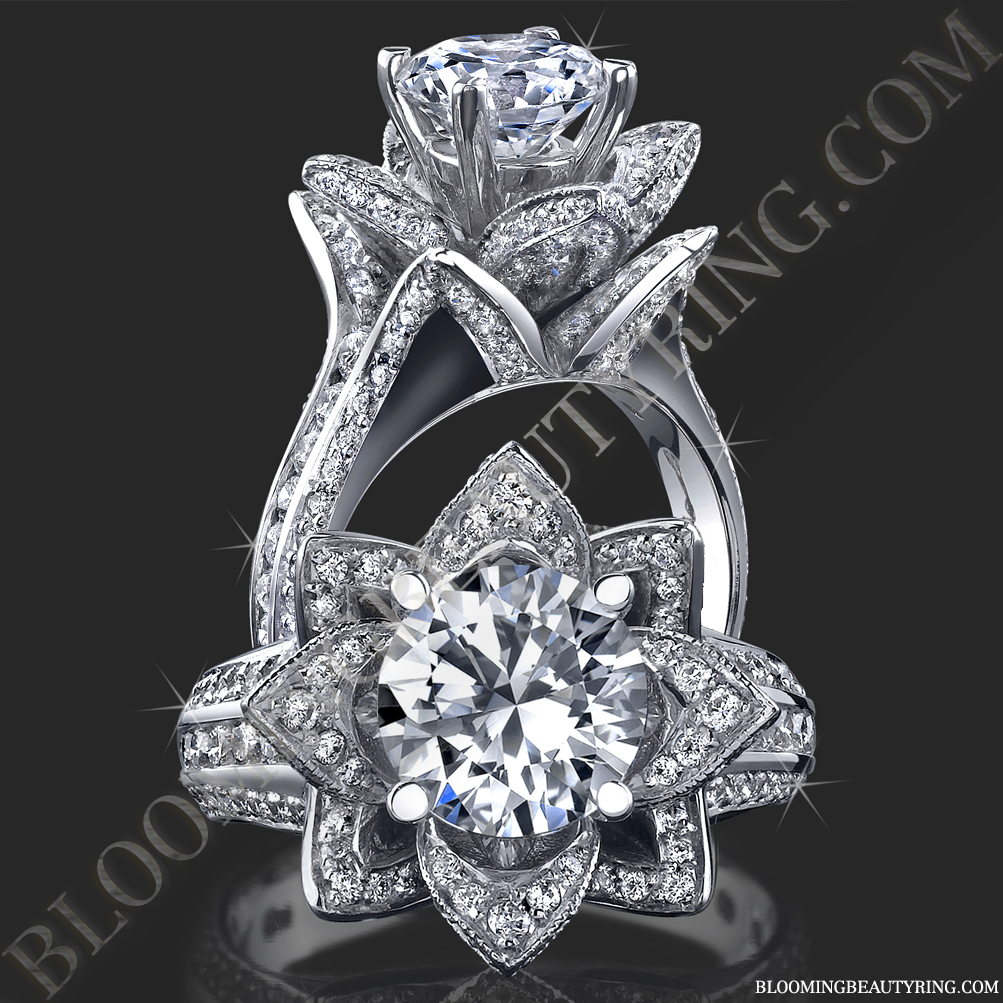 1.78 ctw. Original Large Blooming Beauty Flower Ring
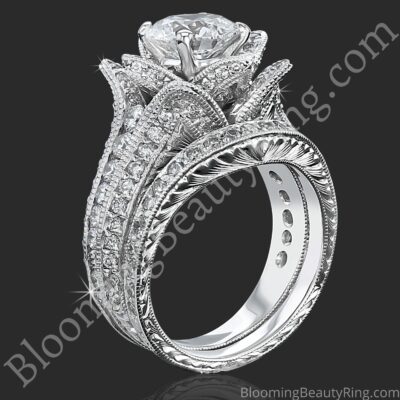 1.67 ctw. Small Hand Engraved Blooming Beauty Wedding Ring Set
Lab Grown Or Earth Mined DiamondsWhich One Is Right For You?
Both Types Of Diamonds Can Be Equally Beautiful
Blooming Beauty Ring offers both lab grown and earth mined center diamonds. We are not here to push you toward either one. Our goal is to explain the honest advantages and disadvantages of each so you can choose the diamond that is best for you.
The first thing to understand is that both are real diamonds. Both can be equally beautiful, both will last forever, and nobody can tell which one she is wearing simply by looking at her ring.
Lab Grown Diamonds
- Cost substantially less than comparable earth mined diamonds.
- May allow you to choose a much larger diamond, a higher quality diamond, spend less money, or all of the above.
- Are created by people using specialized equipment over a period of days or weeks.
- Do not have the geological rarity of a natural diamond and generally have a weaker resale market.
Earth Mined Diamonds
- Were formed by Mother Nature deep within the Earth, usually billions of years ago.
- Offer natural rarity, ancient history and the tradition many people associate with diamond jewelry.
- Have a more established resale market.
- Cost substantially more, which means the same budget will usually buy a smaller diamond, lower quality grades or both.
Most diamonds of either type should not be considered a financial investment. The better choice is the one that fits your preferences, priorities and budget.