
The Diamond Manufacturing Process
Each and every diamond is sorted, analyzed and planned separately and requires the knowledge and experience of several experts in their fields. Once the diamond is planned and it’s “Yield” is estimated, everyone in the production line has the task of achieving the “target”. Diamonds are analyzed before, during and after each step of the manufacturing process.

Step #1) Assortment and Planning of the "Rough Diamonds"
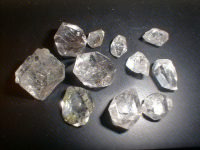
This is of course the “initial stage” of the diamond manufacturing process. In this process, an expert analyzes the rough diamond to determine it’s characteristics.
Lab Grown Or Earth Mined DiamondsWhich One Is Right For You?
Both Types Of Diamonds Can Be Equally Beautiful
Blooming Beauty Ring offers both lab grown and earth mined center diamonds. We are not here to push you toward either one. Our goal is to explain the honest advantages and disadvantages of each so you can choose the diamond that is best for you.
The first thing to understand is that both are real diamonds. Both can be equally beautiful, both will last forever, and nobody can tell which one she is wearing simply by looking at her ring.
Lab Grown Diamonds
- Cost substantially less than comparable earth mined diamonds.
- May allow you to choose a much larger diamond, a higher quality diamond, spend less money, or all of the above.
- Are created by people using specialized equipment over a period of days or weeks.
- Do not have the geological rarity of a natural diamond and generally have a weaker resale market.
Earth Mined Diamonds
- Were formed by Mother Nature deep within the Earth, usually billions of years ago.
- Offer natural rarity, ancient history and the tradition many people associate with diamond jewelry.
- Have a more established resale market.
- Cost substantially more, which means the same budget will usually buy a smaller diamond, lower quality grades or both.
Most diamonds of either type should not be considered a financial investment. The better choice is the one that fits your preferences, priorities and budget.
The unique characteristics of each diamond are analyzed for the 4 C’s. (Cut,Carat,Clarity,Color) This will give a preliminary estimate, of the overall quality of the “rough diamond”
Step #2) Rough Diamond "Planning" and "Marking"
Planning is crucial to diamond manufacturing. Like any other work of art or architecture, a diamond is created twice. Once as a “blueprint” and again as the actual product.
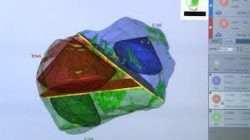
There are various sub-processes in planning, such as (Marking, windowing & simulation)
Hi-Tech computer aided, 3 dimensional “simulation” systems are used to plan the diamond. The exact shape, size and purity of the diamond is determined at this stage. If the planning is not done efficiently, then significant value can be lost. The entire planning process is designed to “maximize” the value and beauty of each diamond and their soon to be diamond shape.
Step #3) Cleaving And Sawing
“Cleaving” and “Sawing are two different processes. Cleaving is essentially breaking up the rough diamond into parts. Sawing can also be used to perform this task, depending upon the need and desired results.
Lasers are the latest and most advanced technology being used by diamond manufacturers to saw diamonds. This method produces extremely accurate results.
“BLOCKING” is a process where the first eight facets are given to the diamond. This technique is used to reduce weight loss from cutting and polishing
“Auto-Blocking” is also used to perform faceting but is completely automatic. When one facet is polished, it automatically rotates and the second facet is started.
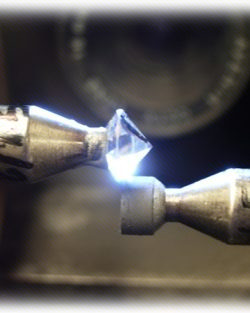
Step #4) Bruting
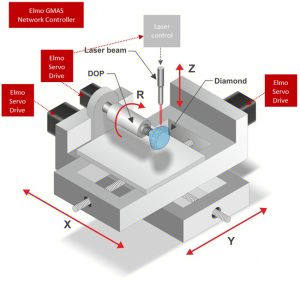
Bruting is essentially the process of giving the diamond “Shape” The “Bruter” considers such things as “maximum” yield, the symmetry of the diamond, and durability (making sure the diamond won’t break easy), utilizing advanced equipment.
Final Step #5) Polishing
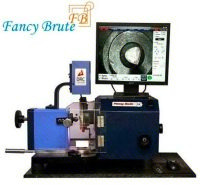
Diamond Polishing Is the final step in the diamond manufacturing process. The “Bruted” diamonds are sent to the polishing phase. Again the diamond is analyzed. The “polisher” has to be very careful in this phase. Even a SMALL mistake can reduce the quality of the diamond. All facets of the diamond are polished.
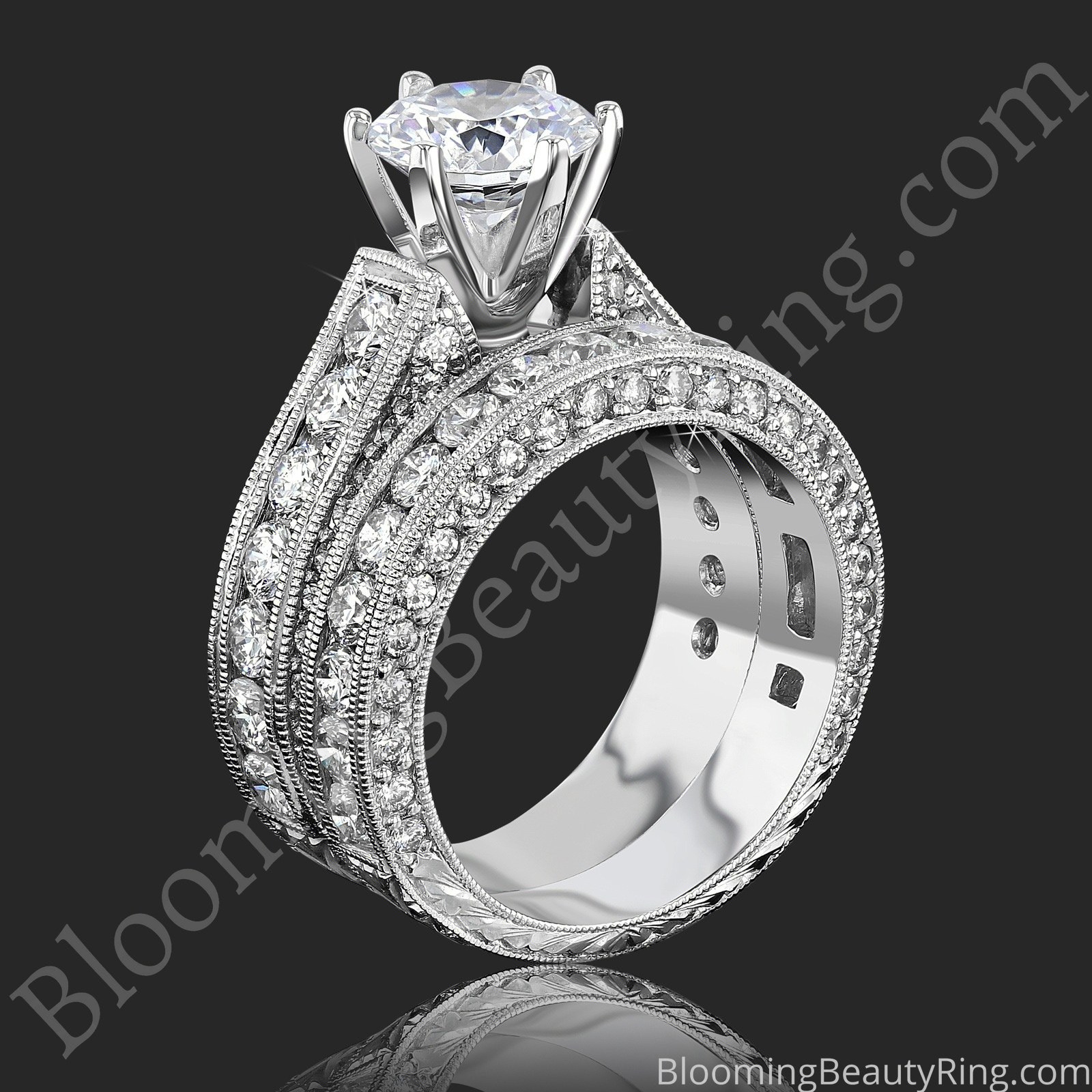 The Lattice Arch – Engraved Diamond Wedding Ring Set
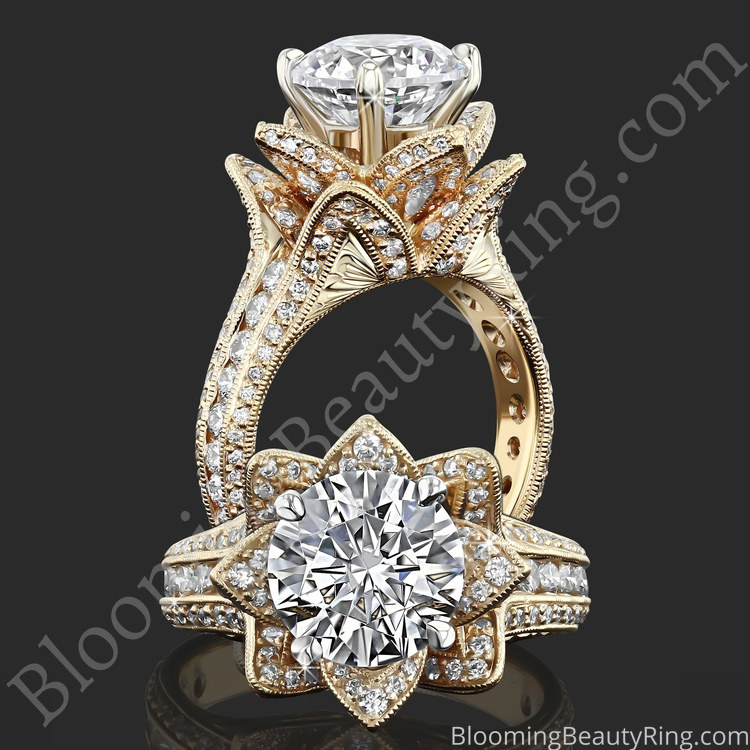 1.78ctw Yellow Gold Large Hand Engraved Blooming Beauty Flower Diamond Engagement Ring
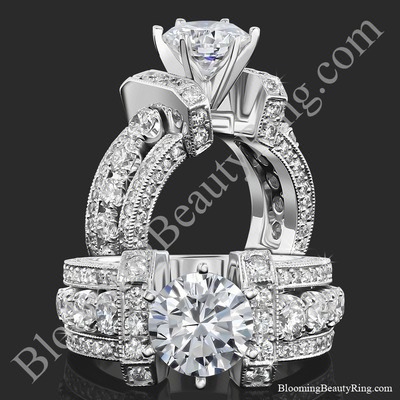 The Show Stopper – 2.0 ctw Statement Diamond Engagement Ring Setting
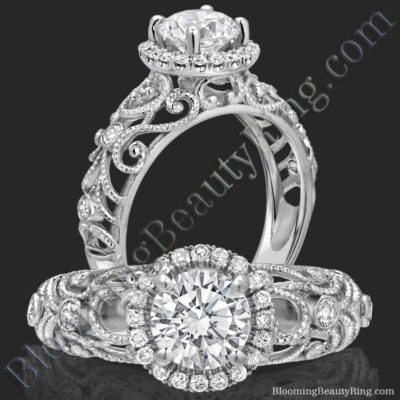 La Bella – Ornamental Filigree Diamond Halo Engagement Ring
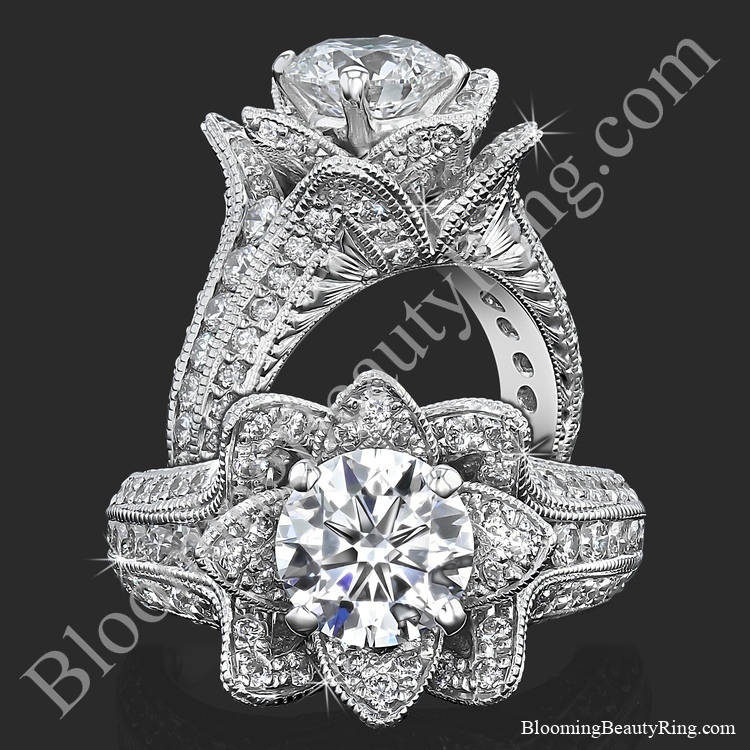 1.37 ctw. Small Hand Engraved Blooming Beauty Engagement Ring
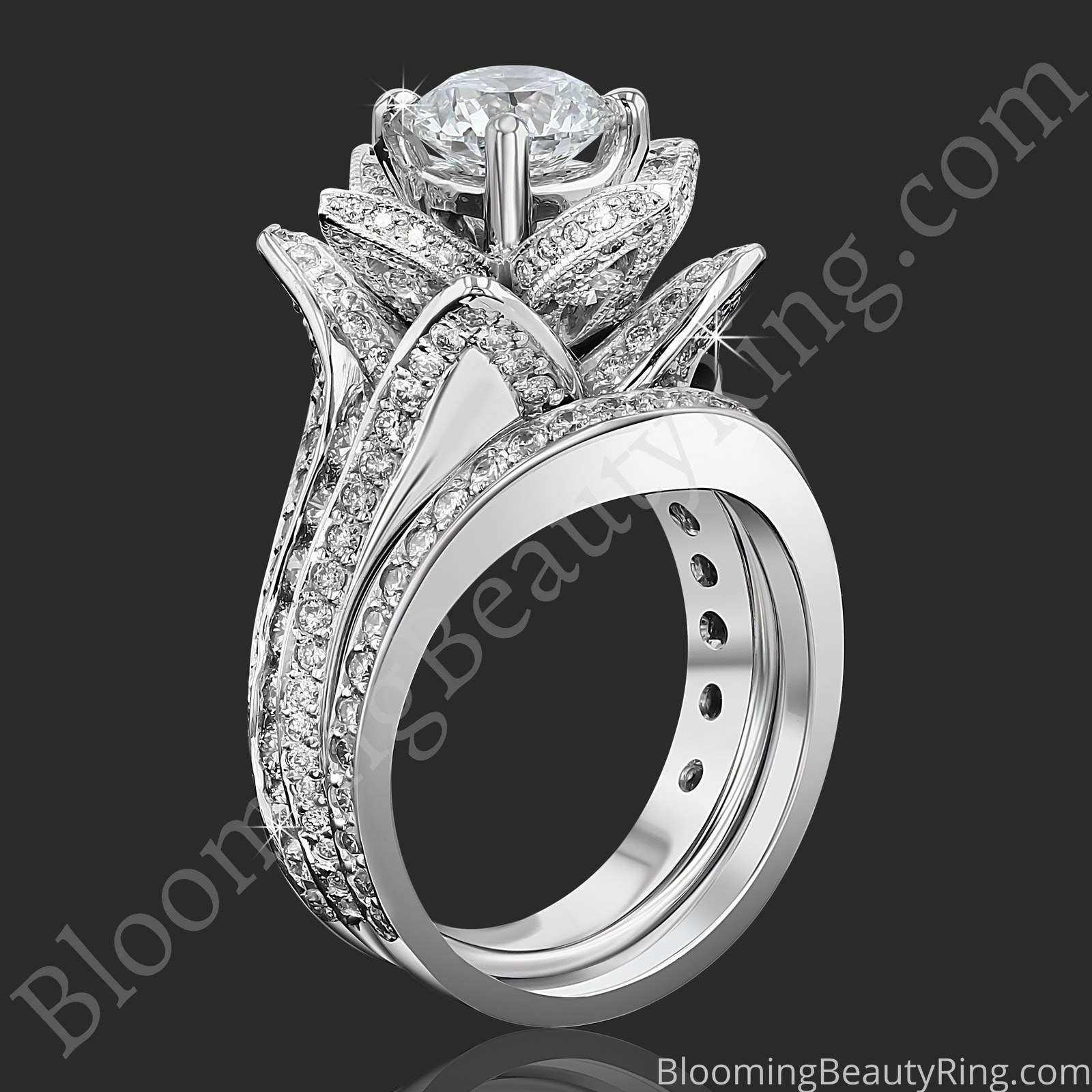 2.08 ctw. Original Large Blooming Beauty Flower Ring Set
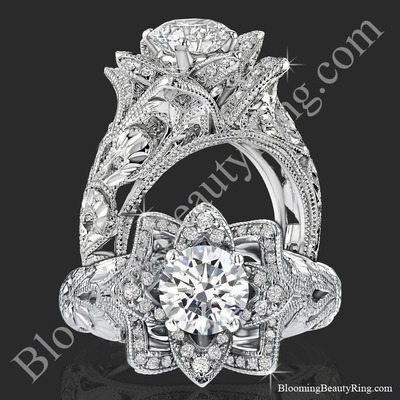 Diamond Embossed Blooming Rose Engagement Ring with Etched Carvings
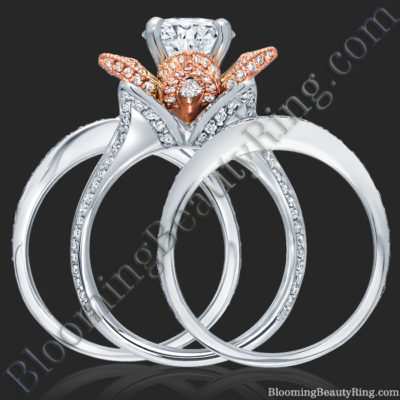 2.38 ctw. Double Band Two Toned White and Rose Gold Flower Ring Set
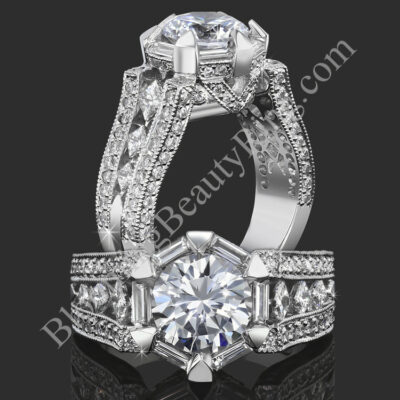 The Queens Crown Low Profile Vintage Inspired Round Engagement Ring
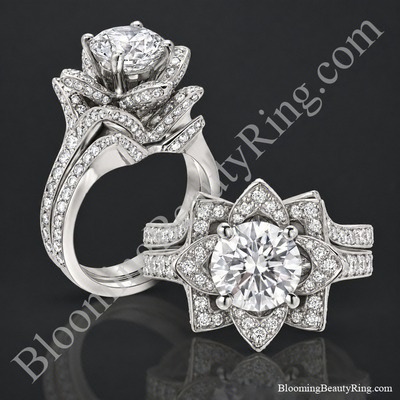 The Large Crimson Rose Flower Diamond Engagement Ring Set
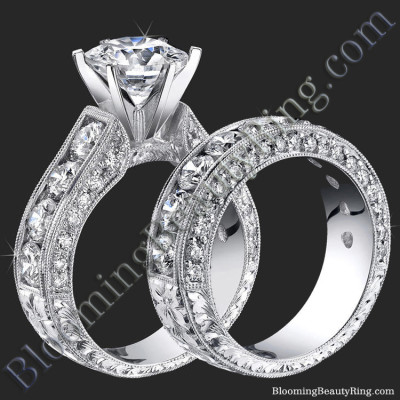 Spectacular 4.20 ctw. Top Quality Round Diamond Engagement Ring Set
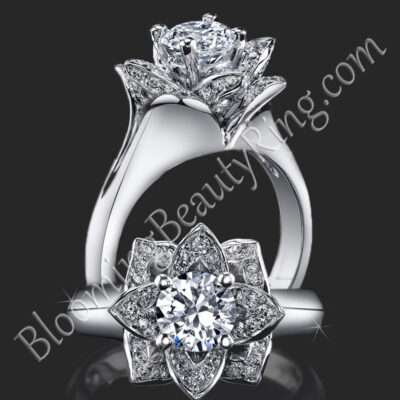 Lotus Ring 8 Petal .58 ct. Diamond Clean Split Shank Flower Ring
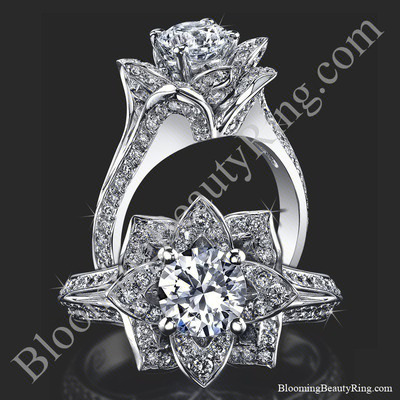 Lotus Ring 8 Petal 1.00 ct. Diamond Band Flower Ring
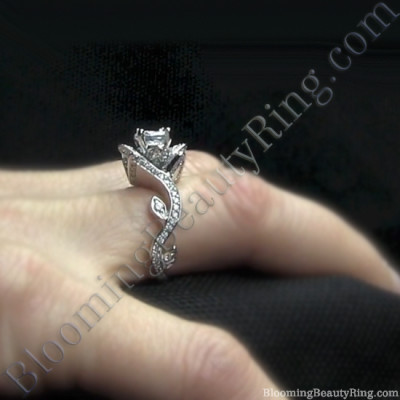 The Lotus Swan 1ct. Diamond Engagement Flower Ring
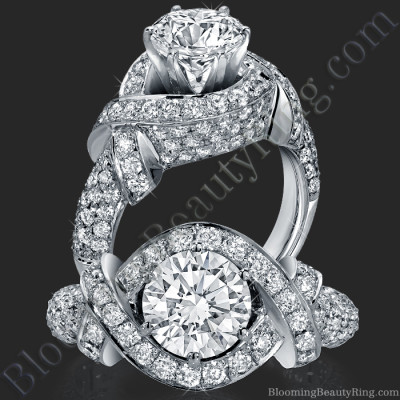 The Eternal Embrace Diamond Engagement Ring
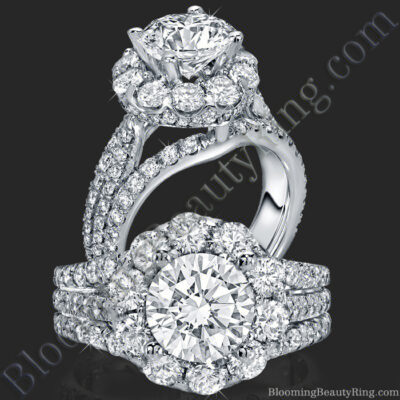 Triple Crown – Three Row Halo Diamond Engagement Ring Setting 2.15CTW
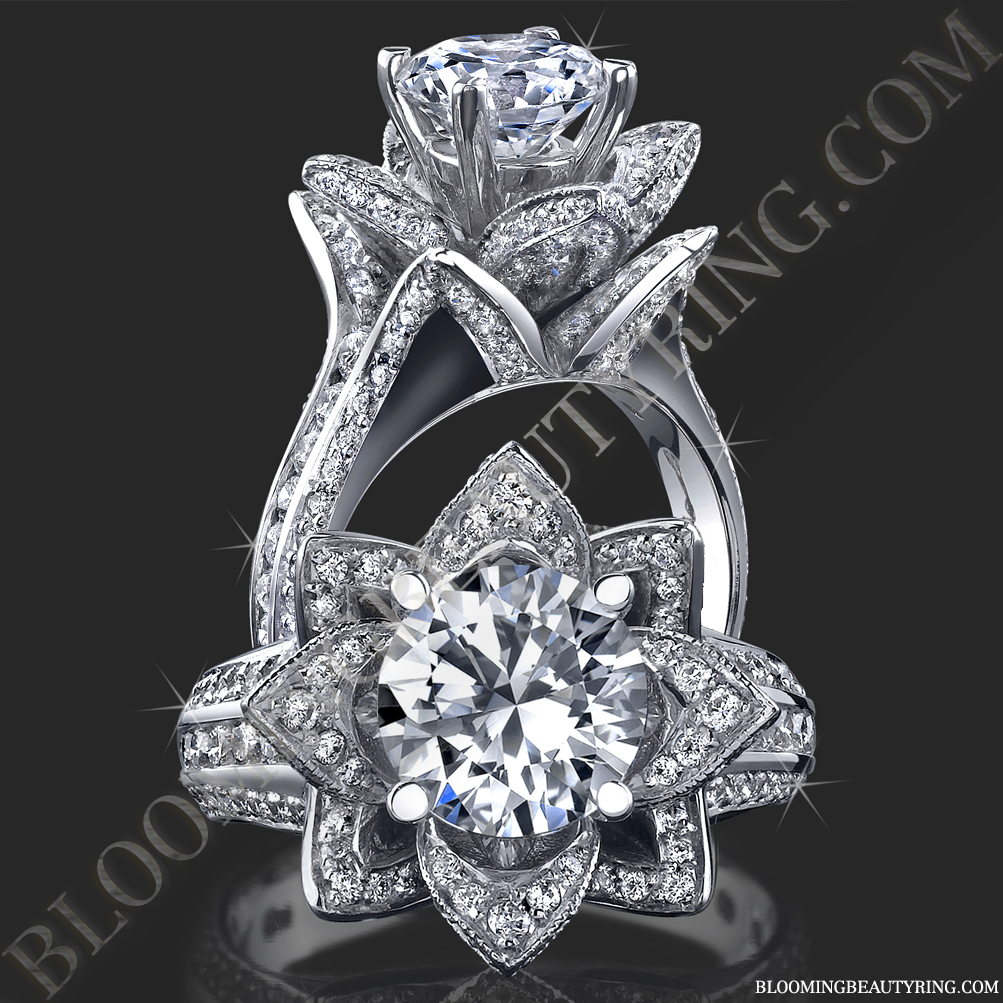 1.78 ctw. Original Large Blooming Beauty Flower Ring
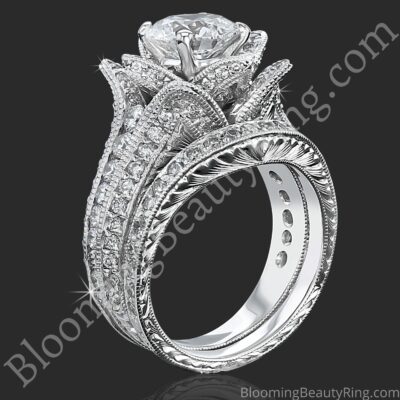 1.67 ctw. Small Hand Engraved Blooming Beauty Wedding Ring Set